Blackfoot Challenge
I love it when people who have a history of conflict, come together and agree on things. And that’s what’s happening along the Blackfoot River in western Montana.
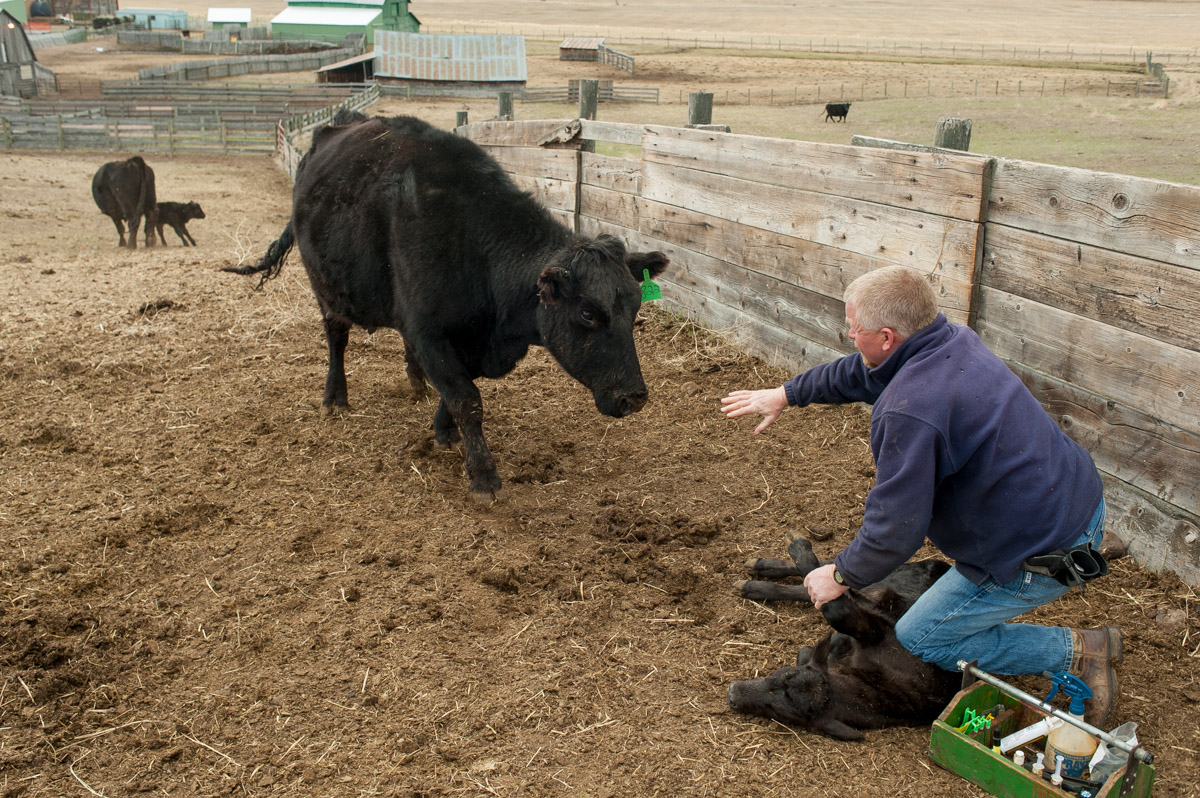
Ranchers like Jim Stone have a lot to worry about. There’s the weather, expenses like fuel and feed, and there’s medical problems too, not to mention the danger of vaccinating a new calf while its 1,500-pound mother might be getting over protective.
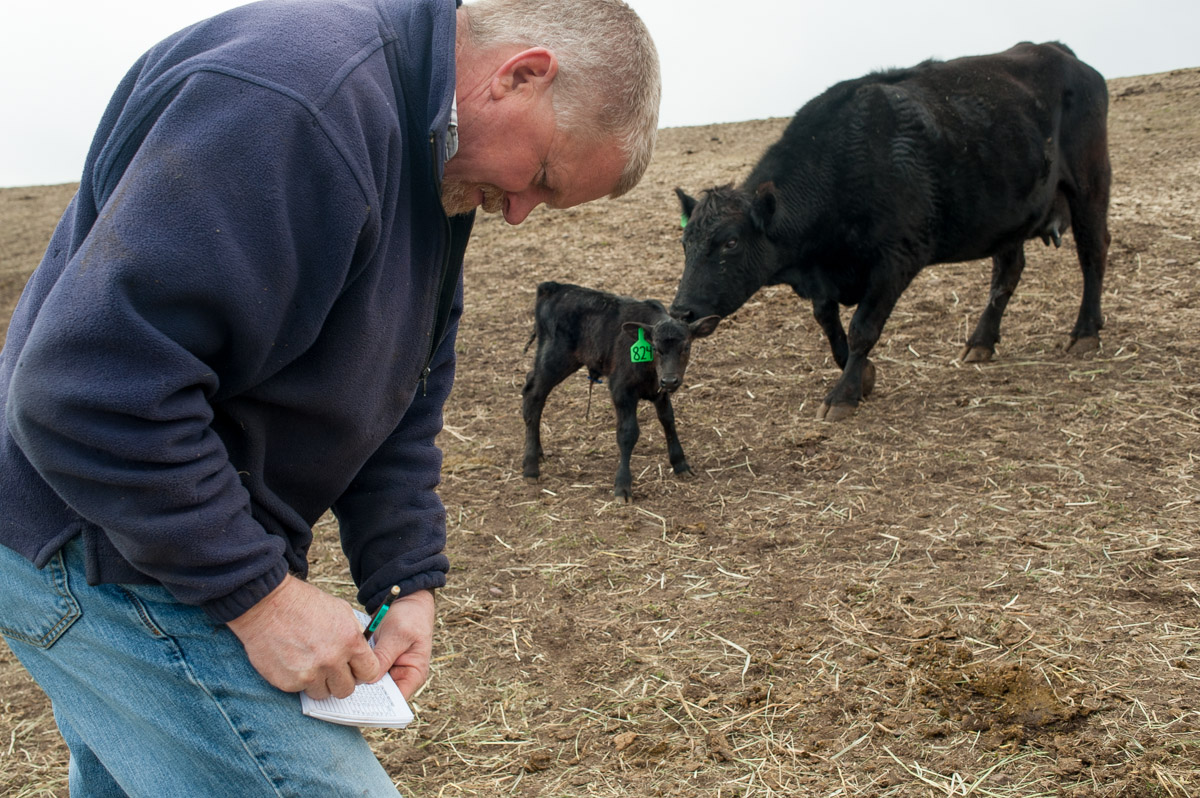
Understandably they don’t like it when a bunch of environmentalists and government agents come poking their noses in to tell the ranchers how to run things better.
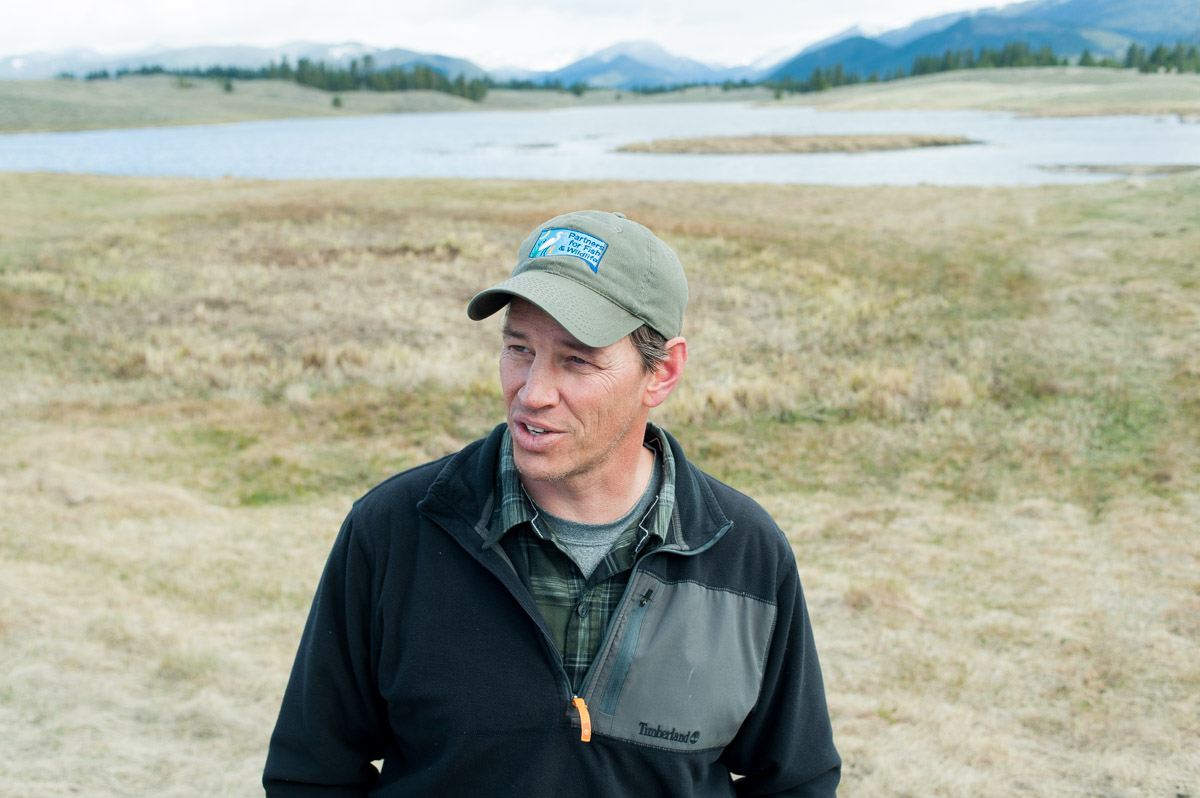 And government people like Greg Neudecker of the U.S. Fish & Wildlife Service are charged with the duty of making sure those using the land to make money aren’t ruining it for the flora and fauna.
So you can see the potential for conflict.
But some years ago, folks like Stone and Neudecker got together with other ranchers, government agencies and environmental organizations and started following the 80-20 rule. They figured they agreed on 80 percent of the issues involved in caring for the land. They all wanted a healthy ecosystem. So they resolved to work together on those 80 percent issues and leave the 20 percent for later. Sure enough, trust was built, common ground, common interest was found and now the Blackfoot Challenge is making waves across the world.
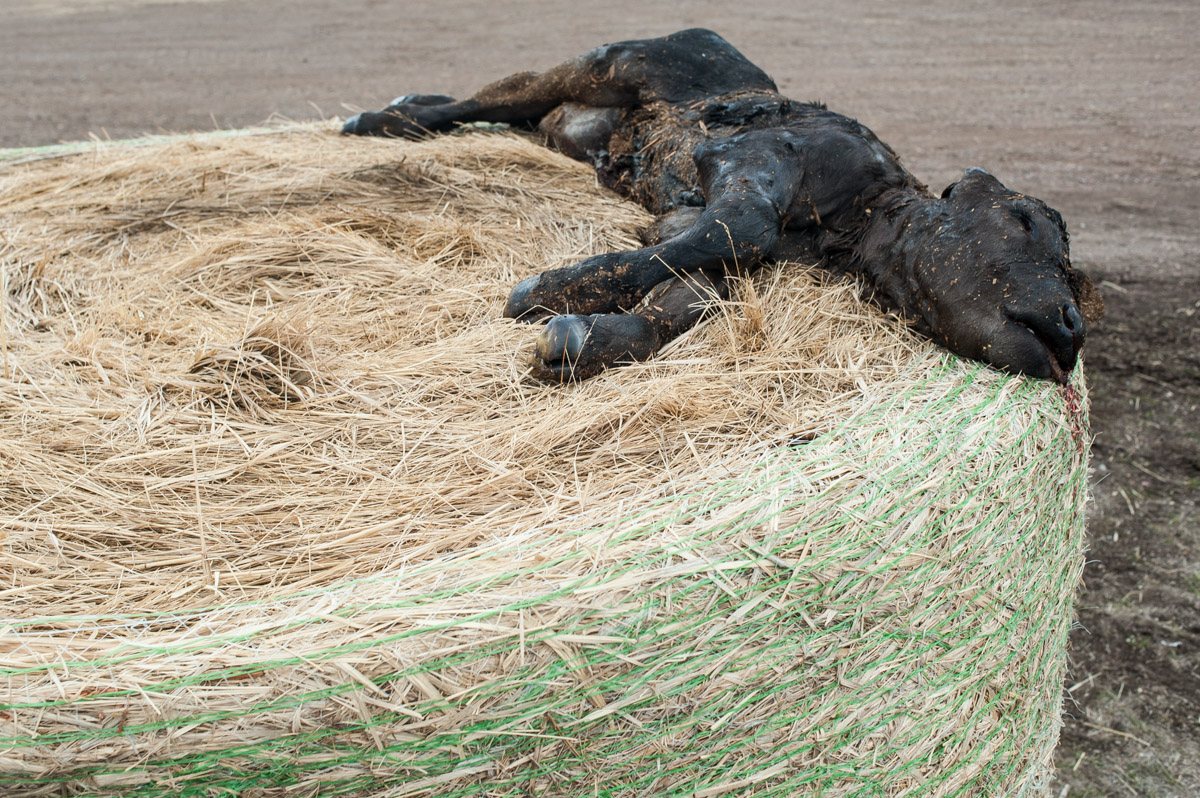 This is a dead calf.
Sad, but it happens.
It’s a fact of ranching. And Stone says ranchers used to bury their dead calves in the fields or just leave them for scavengers. They didn’t want their neighbors knowing they had lost livestock, even though the neighbors were probably losing some too. But Stone and his neighbors got together, realized that they were creating kind of a dangerous situation leaving meat out when grizzly bears were around. Some of them were nervous sending their teen-aged sons and daughters out to check on the calves in the middle of the night.
Fish & Wildlife didn’t like bears and coyotes getting the idea that hanging around people and livestock was a great way to get an easy meal, and it turns out that the highway department was composting road kill to keep roadside vegetation green. So now the ranchers put their dead where a hired man can come get it in a pickup. The pickup is paid for by Fish & Wildlife and the highway department gets some extra compost material.
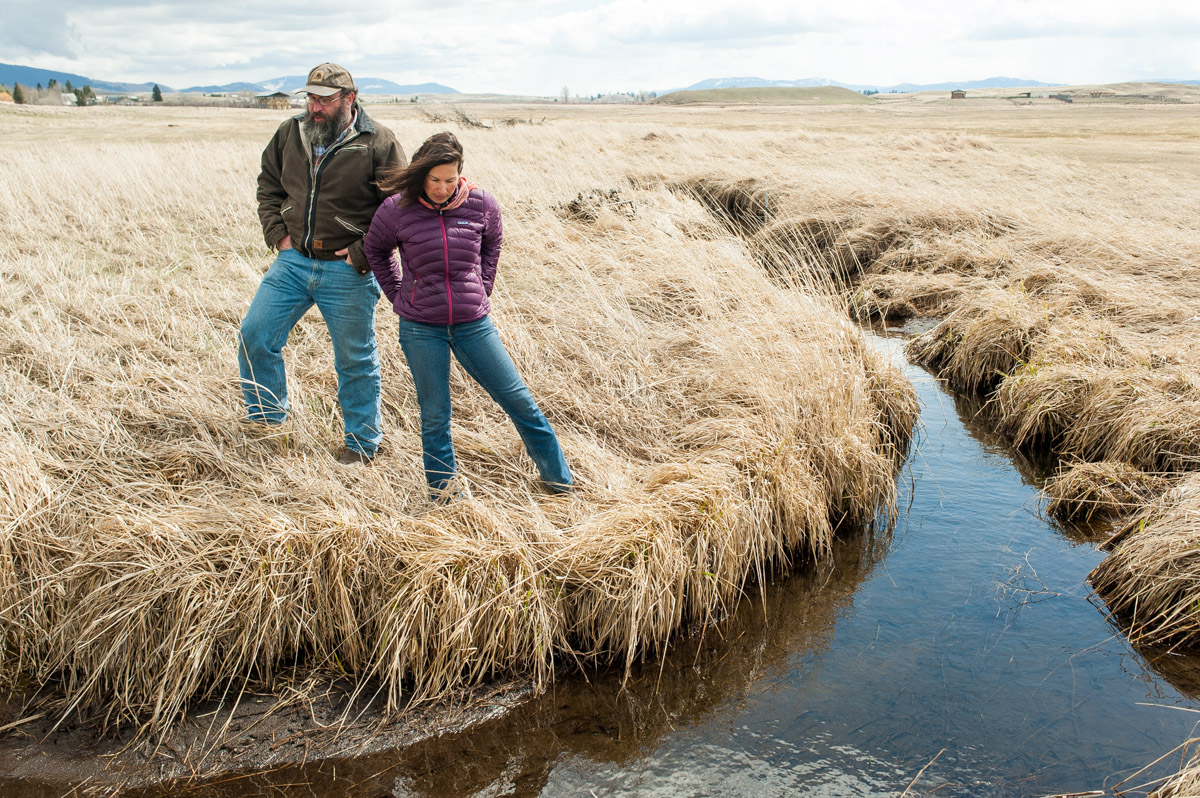
Trout Unlimited is an environmental group with an interest in the Blackfoot Valley watershed. Scott Gordon, left, and Juanita Vero are part of it. They’re looking over Hoyt Creek on Stone’s Rolling Stone Ranch near Ovando. Stone says the creek had been lowered up to 12 feet in the past, probably to dry out the fields on either side so that they could support the tractors necessary to grow hay. Stone says he worked with the U.S. Fish & Wildlife Service to install eight adjustable dams and a new channel for the creek. This work raised the water level so that the fields were now sub-irrigated, which means that he no longer had to drain the creek to grow hay. And the adjustable dams allow Stone to dry out the fields just enough to run equipment on them as needed. The result is improved bird habitat, a restored fishery (making TU happy), and a quadrupling of Stone’s hay yields. “It’s a win-win for everybody,” says Stone.
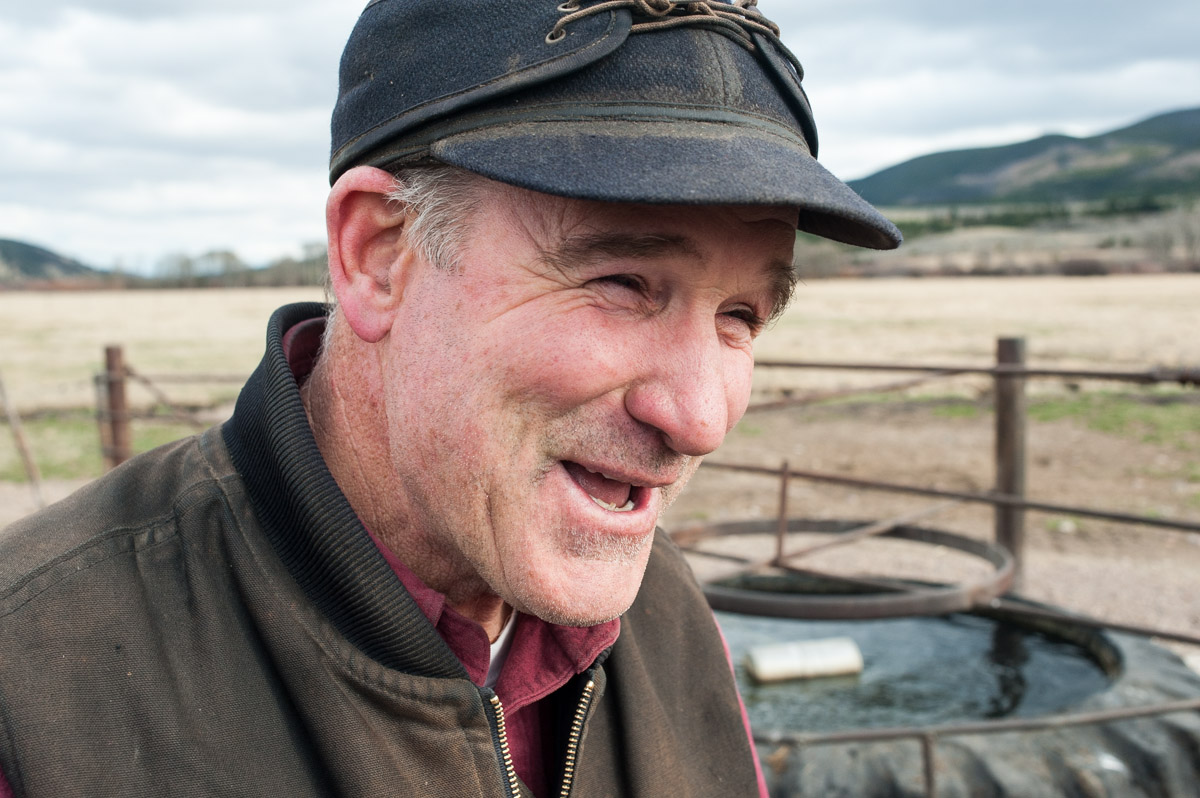
David Mannix runs a ranch near Helmville with his brothers. He says the Blackfoot Challenge helped him buy tire tanks that allow him to water his cattle away from Nevada Creek. Now Nevada Creek isn’t stressed by cattle on its banks for extended periods, and he gets to move his cattle more often to fresher, better grass, increasing his yield.
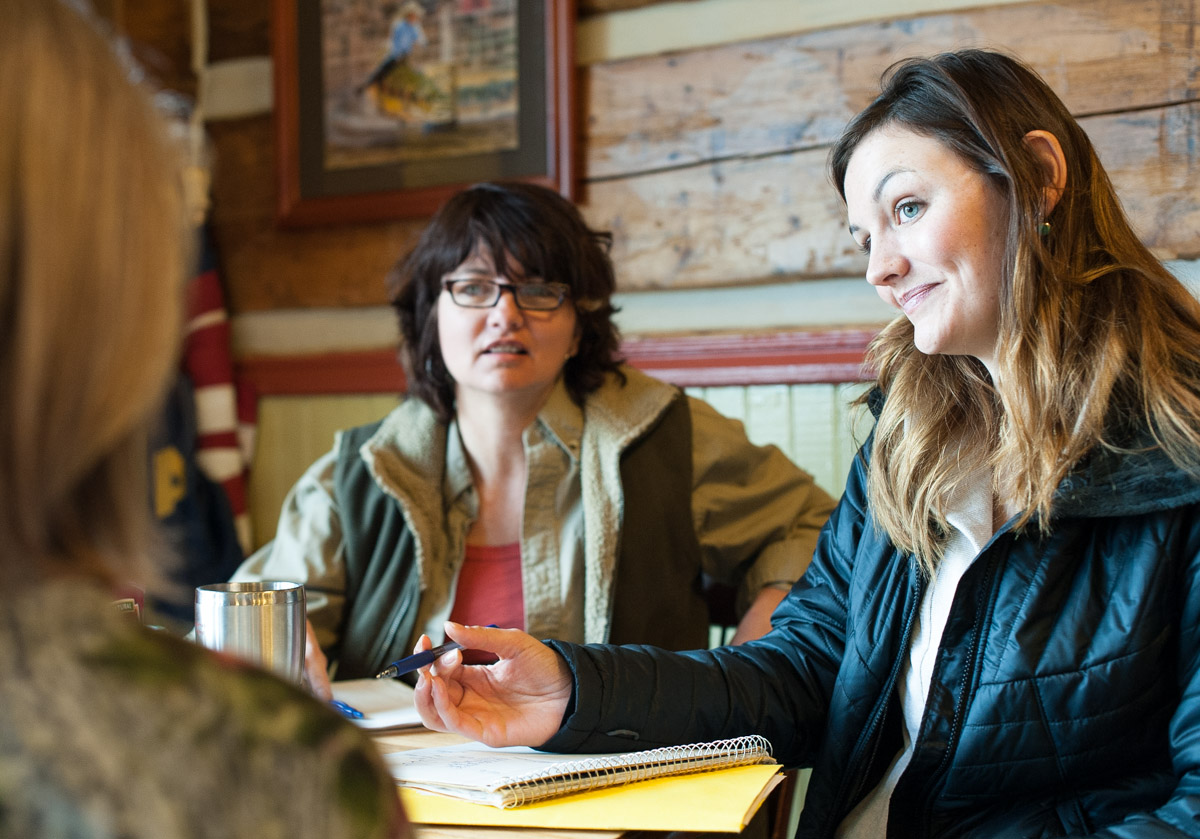
And now everyone seems pretty happy. Some of the issues in the 20 percent got talked about because so much trust was built up on the 80 percent. Meetings happen and issues are worked out. “We exist to coordinate, to facilitate,” says the Challenge’s Sara Schmidt, right, meeting at the cafe next to the Blackfoot Challenge office with Traci Bignell, center and Elaine Caton. “We’re not an advocacy group,” adds Bignell. “It’s more about empowering people.”
Stanford
Stanford, Montana, looks like it’s winning a battle a lot of rural American towns are fighting: to keep vibrant, to stay young, to have energy.
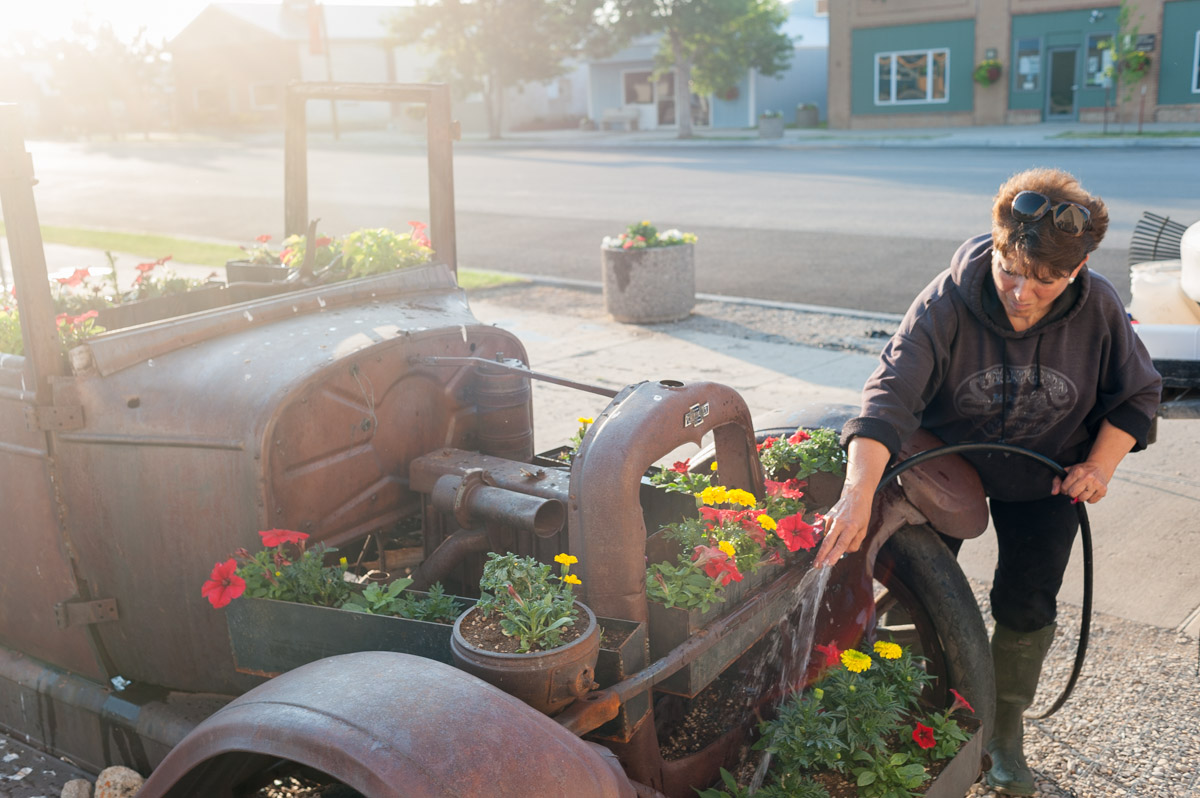
One of the leading forces for Stanford’s energy is Tess Brady, whose business card reads, “Resident Bitch,” a title she says she gave herself. She says that’s because she isn’t afraid to pester city government and businesses to get after and keep after projects that make Stanford look cared for and proud. And no one works harder than Brady, who is watering and weeding some 60 planters and 35 window boxes of flowers around town from 5 to 7 every summer morning and then again from 8 to 10:30 every summer evening. In between, she is a bank vice president.
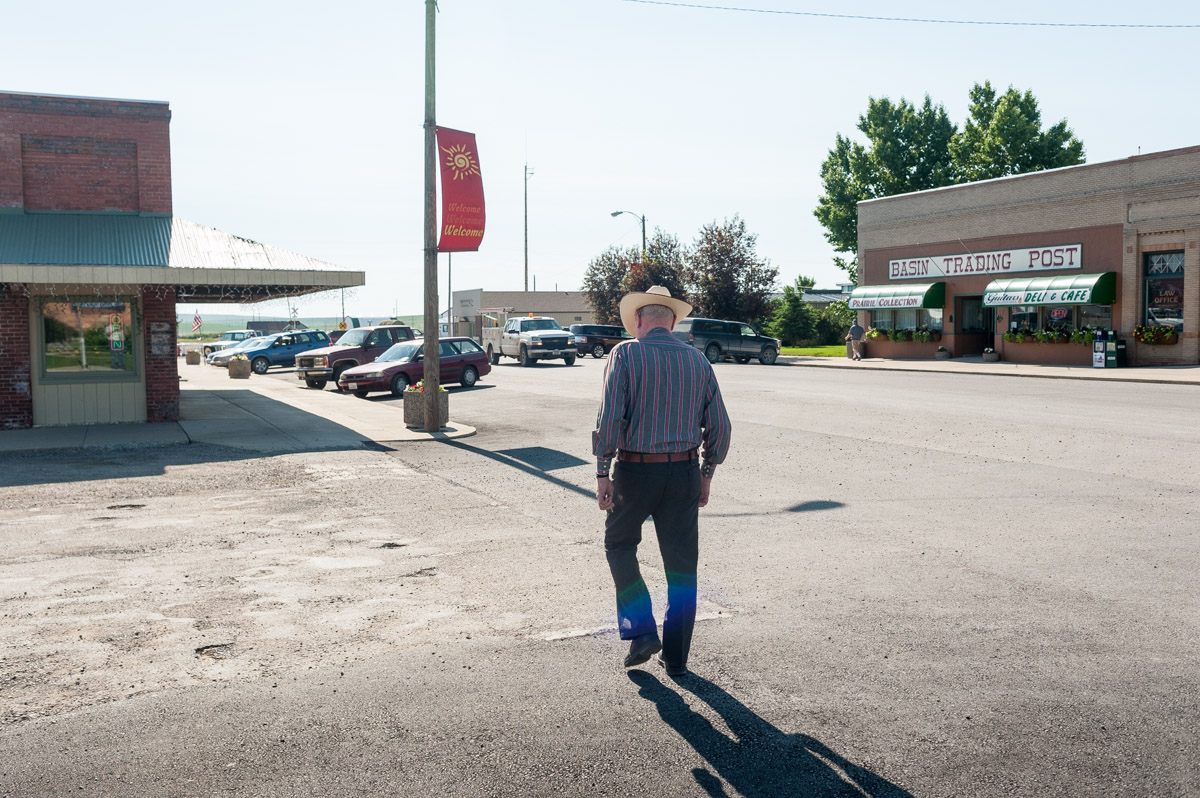
Besides the flowers, Brady was one of the forces behind the repaving of Stanford’s downtown. Above, Don Dixon walks along Central Avenue to meet his wife at a corner coffee shop. The storefronts are occupied in Stanford and the downtown is clean. Residents say that shows off a strong community spirit.
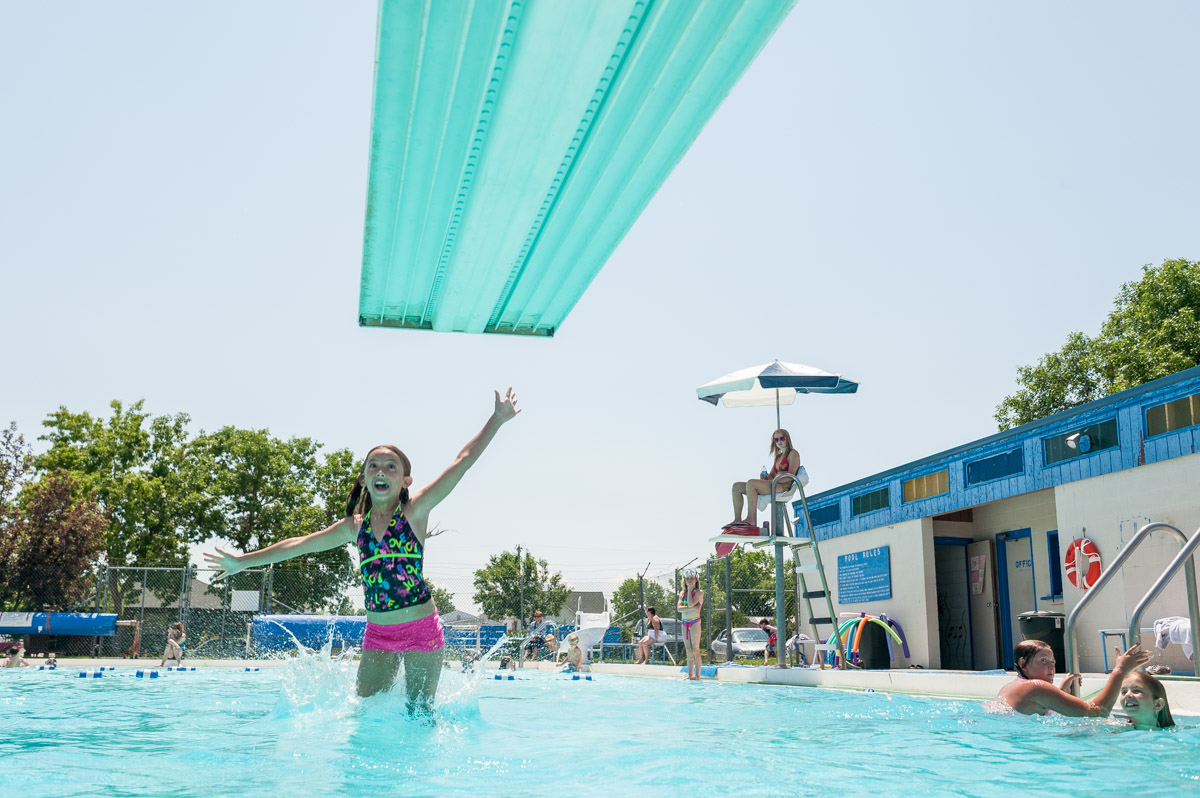
As does the Stanford pool, an 85-foot by 45-foot source of local pride built in the 1970s and paid for and maintained by community fund raising, according to manager Sarah Bracha. In addition to the pool, there’s a library, a museum — even a staffed medical care facility. “There’s a lot of community spirit here,” Bracha says. “For a small town, we have it all.”
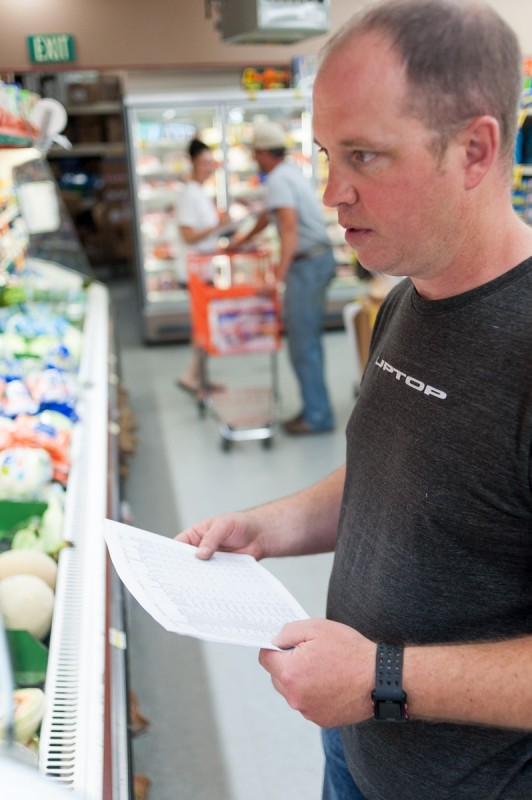
That includes Ted Kaste’s K’s Supermarket. Kaste, 41, grew up in Stanford, got a degree in archaeology and had established himself as a wild land firefighter, supervising an engine crew, when his dad decided to sell his grocery store in Stanford. “That’s when I got interested,” Kaste says. Until then, he says, the idea had never entered his mind. But he and his wife dropped everything and dove in. After a year, he began to make changes, investing in modernizing the store, changing distributors. He says he wants a store to be proud of. He makes sure his prices and selection are competitive with stores within driving distance. “I don’t want customers that shop here just because it’s the local place,” he says.

Of course Stanford has its characters. And barber Don “Andy” Anderson is one of them, shown here joking with a parting customer. Andersen, 74, has been cutting hair in Stanford for five decades, selling fireworks out of the shop for 35 years. He says he and his wife, Alverta, have been in a number of other businesses in town, including a clothing store and a deli. “We’ve been in everything,” he says. “It’s a fun town.” Dean Rowland remembers having his hair cut by Anderson at about age 6. He says Anderson told him a dog lying nearby was waiting hungrily for a squirming boy to get his ear cut off by mistake. “I was 22 years old before I ever moved in the chair again.”
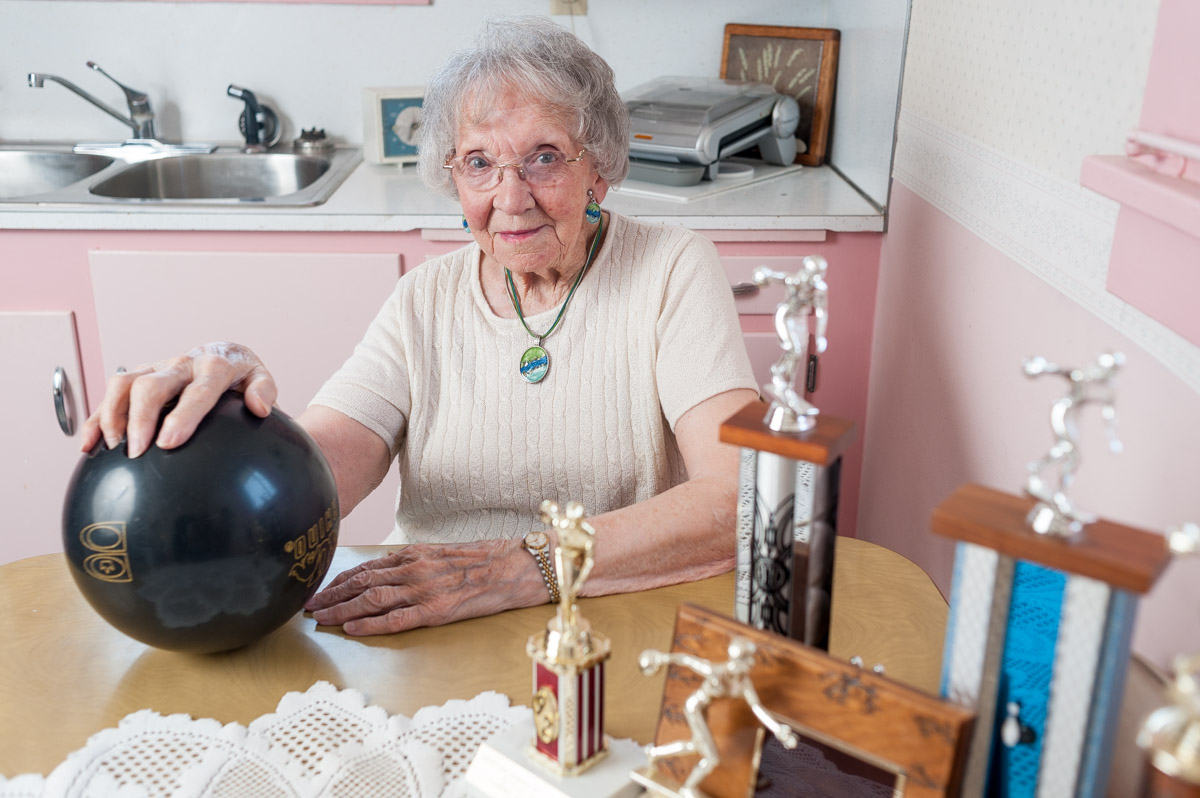
“I come here in ’36,” says Florence Whitfield of her arrival in Stanford as a new bride from the town of Geyser, just 16 miles west of Stanford. Whitfield says she and her husband farmed wheat until he died in 1977, when she moved permanently into their house in town. But she has remained active, despite her age, which is nearing a century. Whitfield golfs and is an accomplished bowler, evidenced by her trophy collection. In 2005, she says she was the oldest bowler at the state tournament. Her high score is a 266, she says, which equates to nine strikes and one spare.
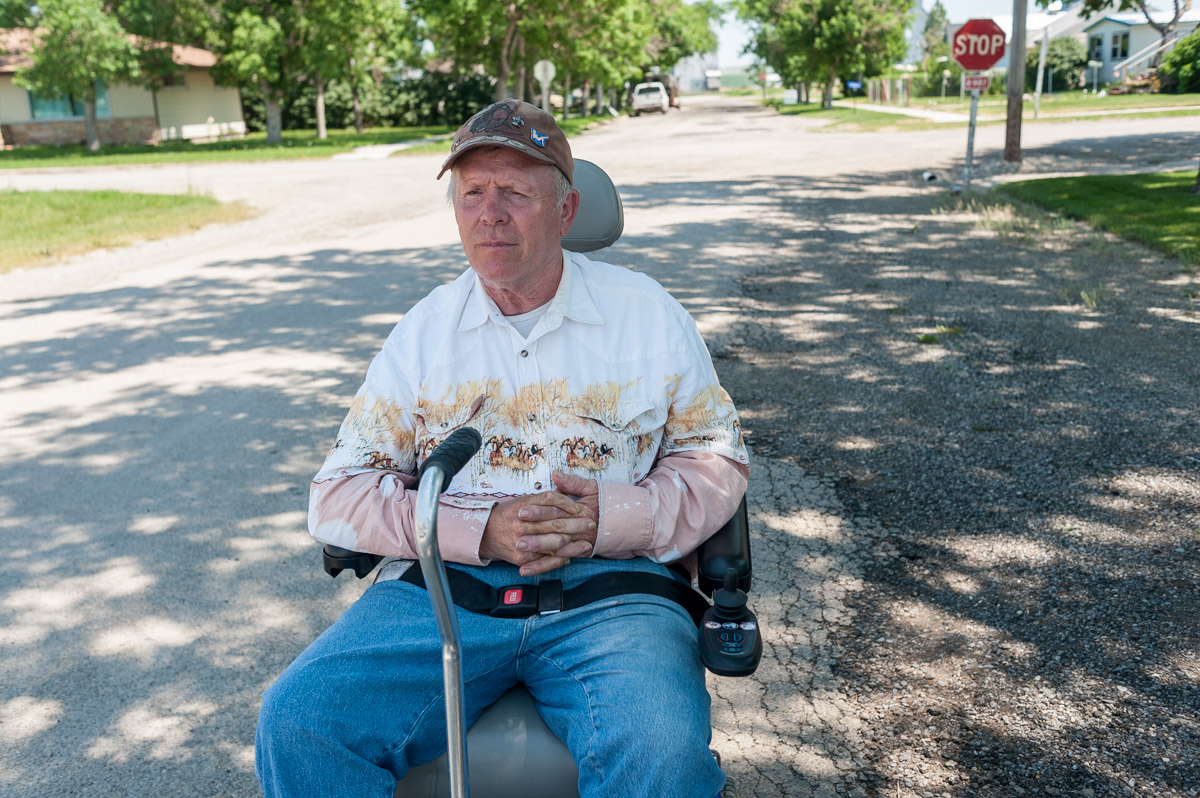
Gary Worm travels the quiet, shaded streets of Stanford on his motorized wheelchair. Worm says he was born in Stanford in 1951 and spent three years in the military during the Viet Nam War. Stationed in Germany, Worm says he was busy rodeoing, competing in saddle bronc, bulls, bareback and wild horse racing events. In 1974, Worm says he was home in Stanford, crossing the railroad tracks when his vehicle was struck by a speeding train. “It took me from one side of town to the other,” he says. Worm is from an old Stanford family that continues to care for him, one resident says.
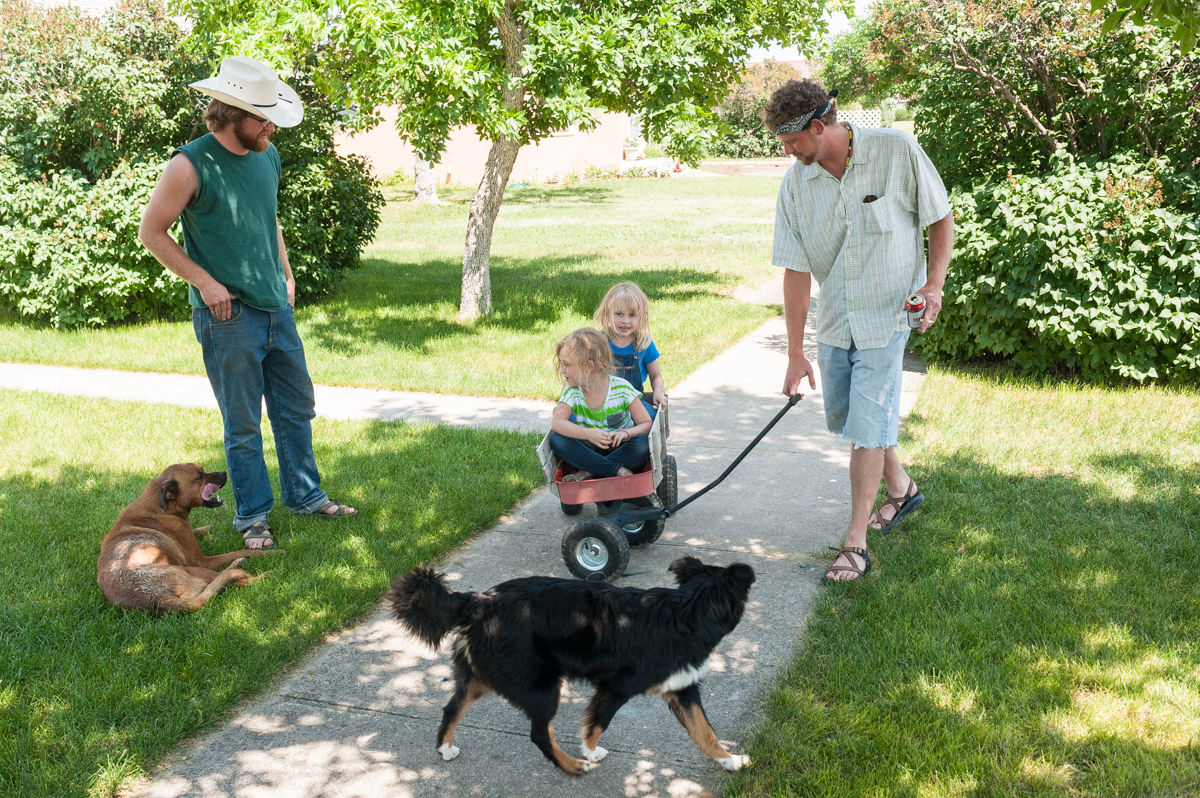
Outside their mother’s home in Stanford, Kyle Marquardt, left, and his brother Jerry watch over their dogs and Jerry’s two daughters. The brothers, now in their mid-20s and working in the oil industry in Winnet, say they spent their elementary-school years in Stanford. “After moving away,” says Kyle Marquardt, “you realize how good it was.” Those sentiments are echoed by Ryanne Blank, who grew up in Wolf Creek, then moved around the country a bit before she and her husband took over the Sundown Motel from his parents four years ago. “Small towns are the best,” she says. “(Stanford) is a close-knit community. It’s almost like a big family.”

Ceramics Festiva
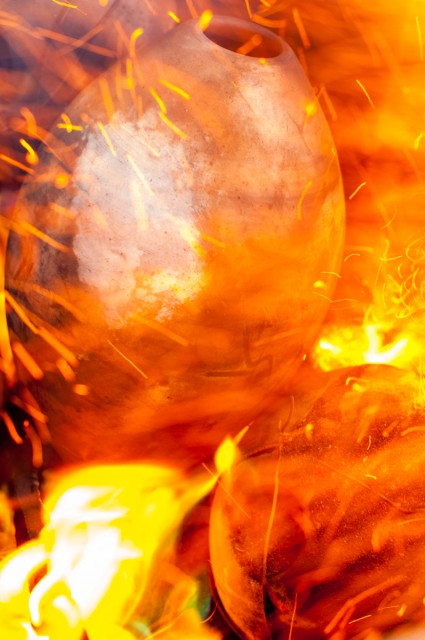
There’s something magical about ceramics. I think it’s the fire.
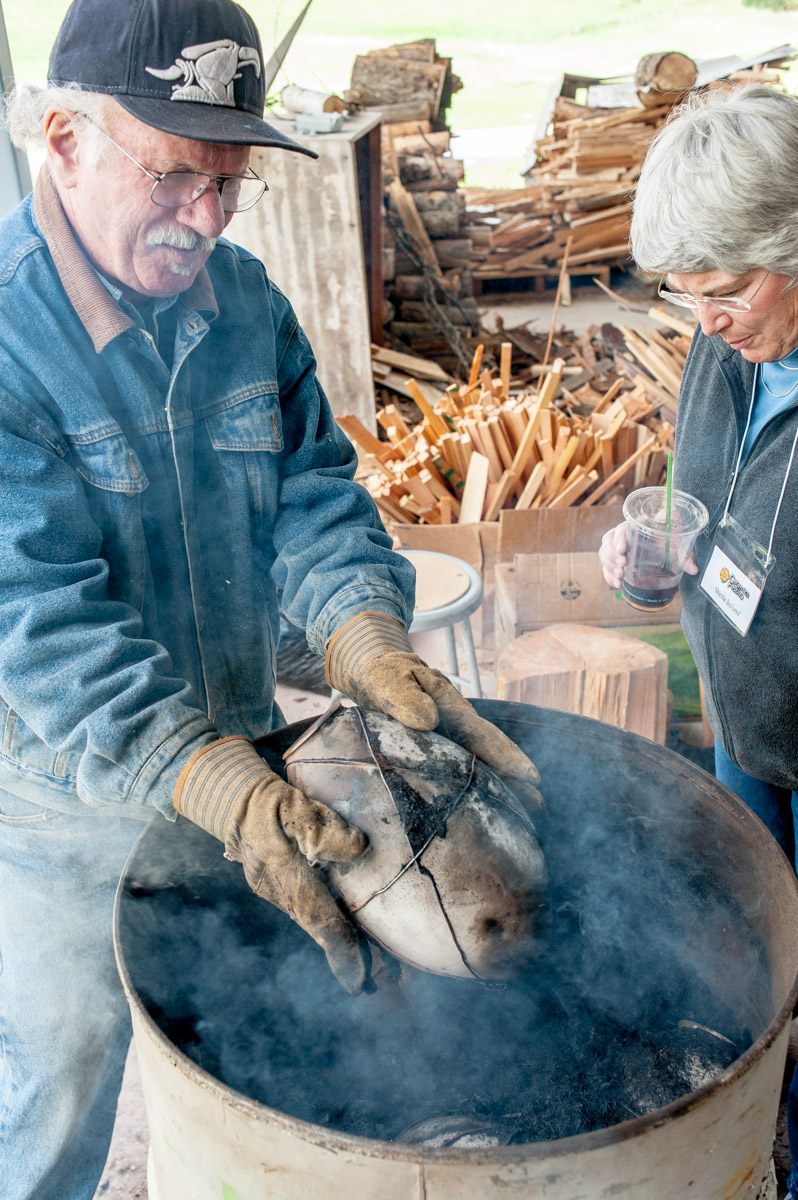
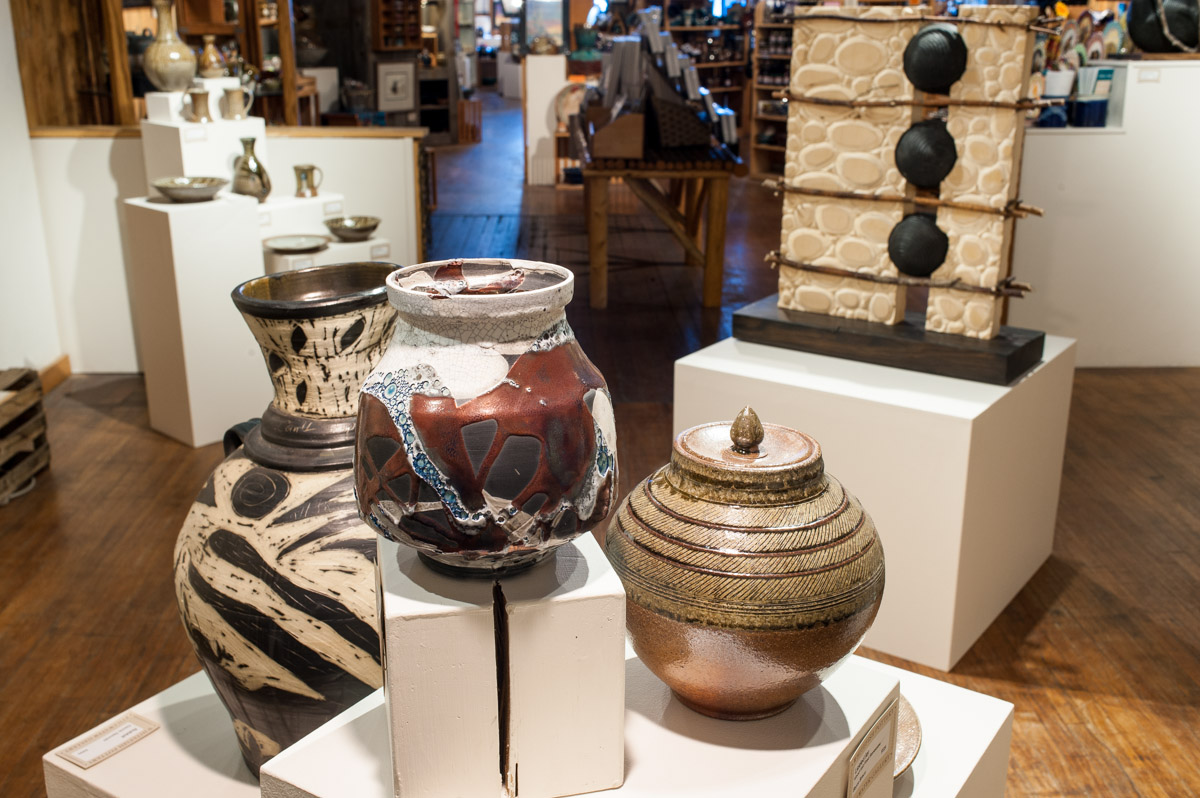
An artist spends hours, days, years molding earth into a vision, then puts their vision into an inferno. And instead of destroying the vision, the inferno brings it to life.
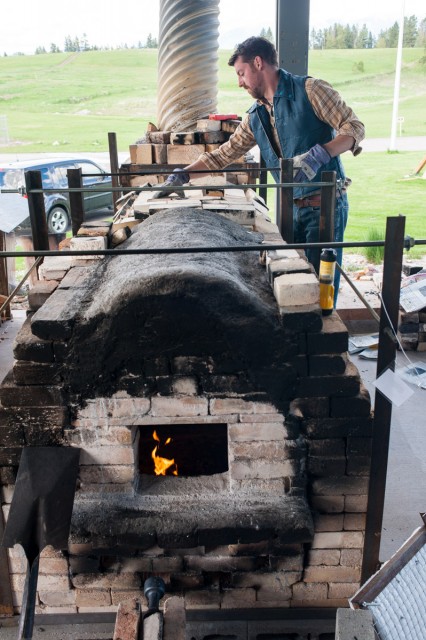
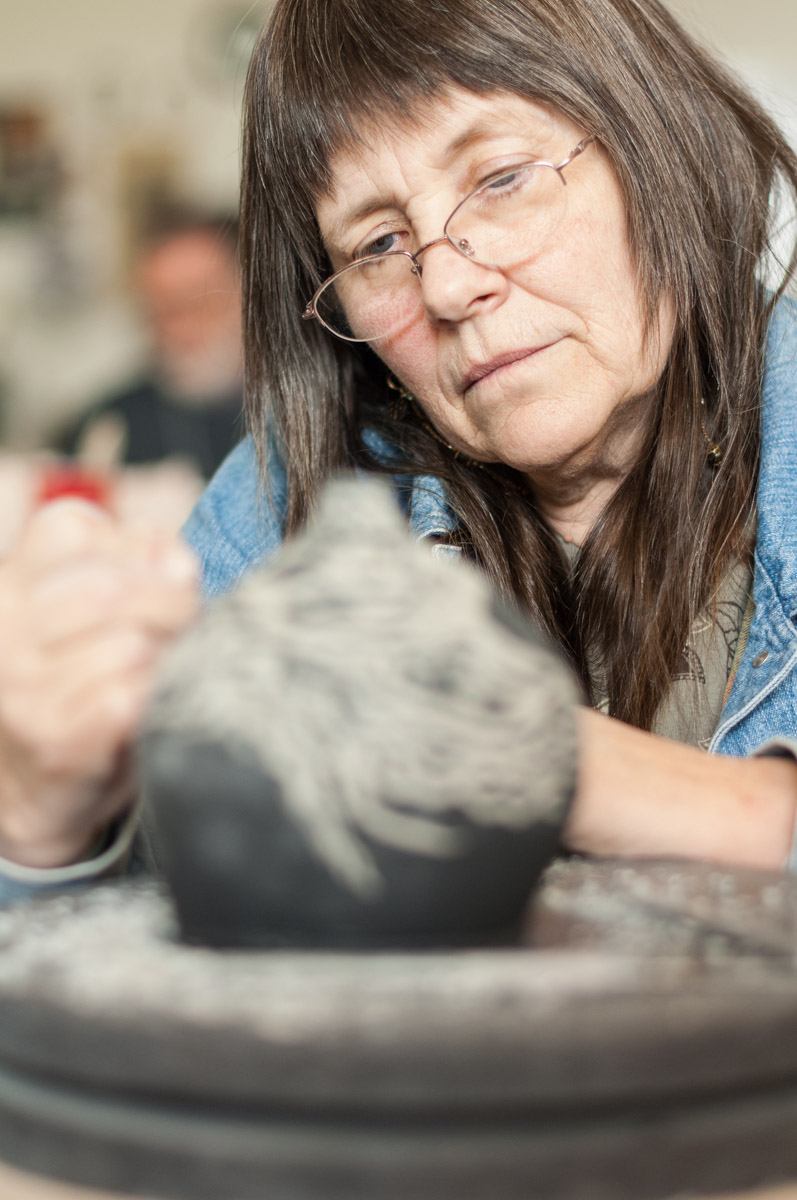
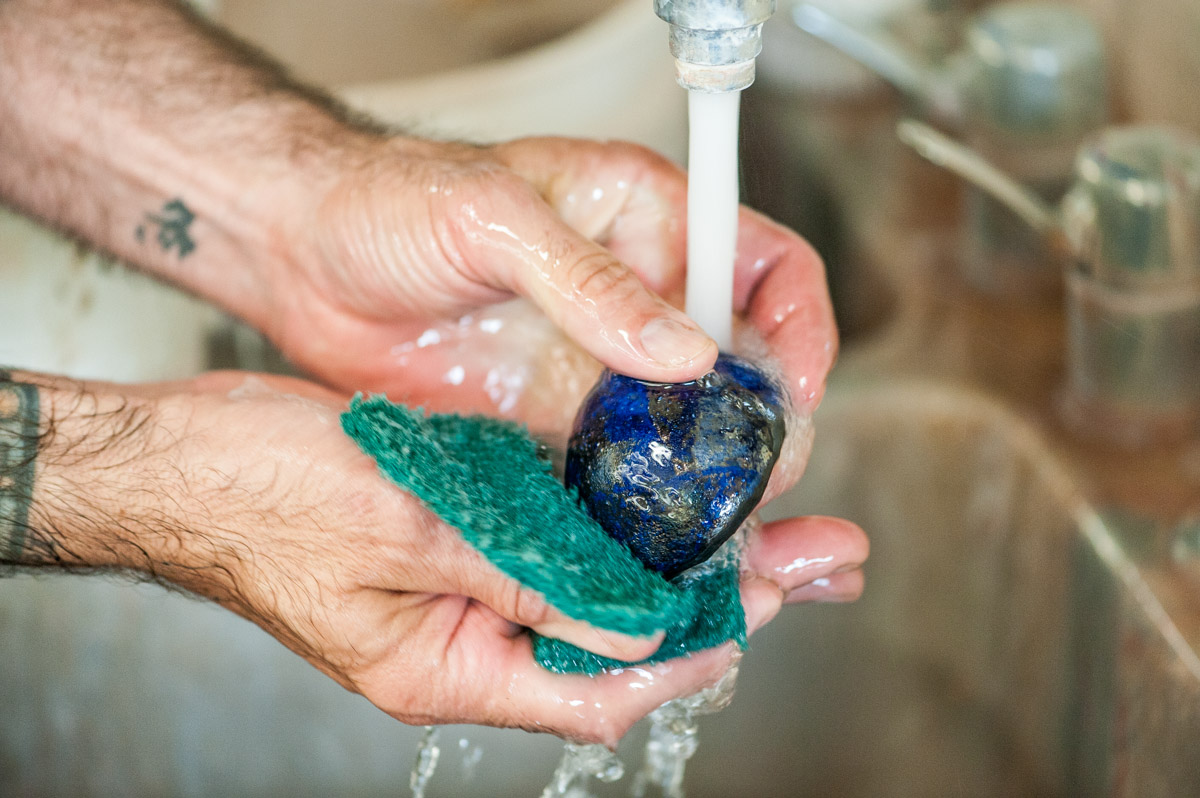
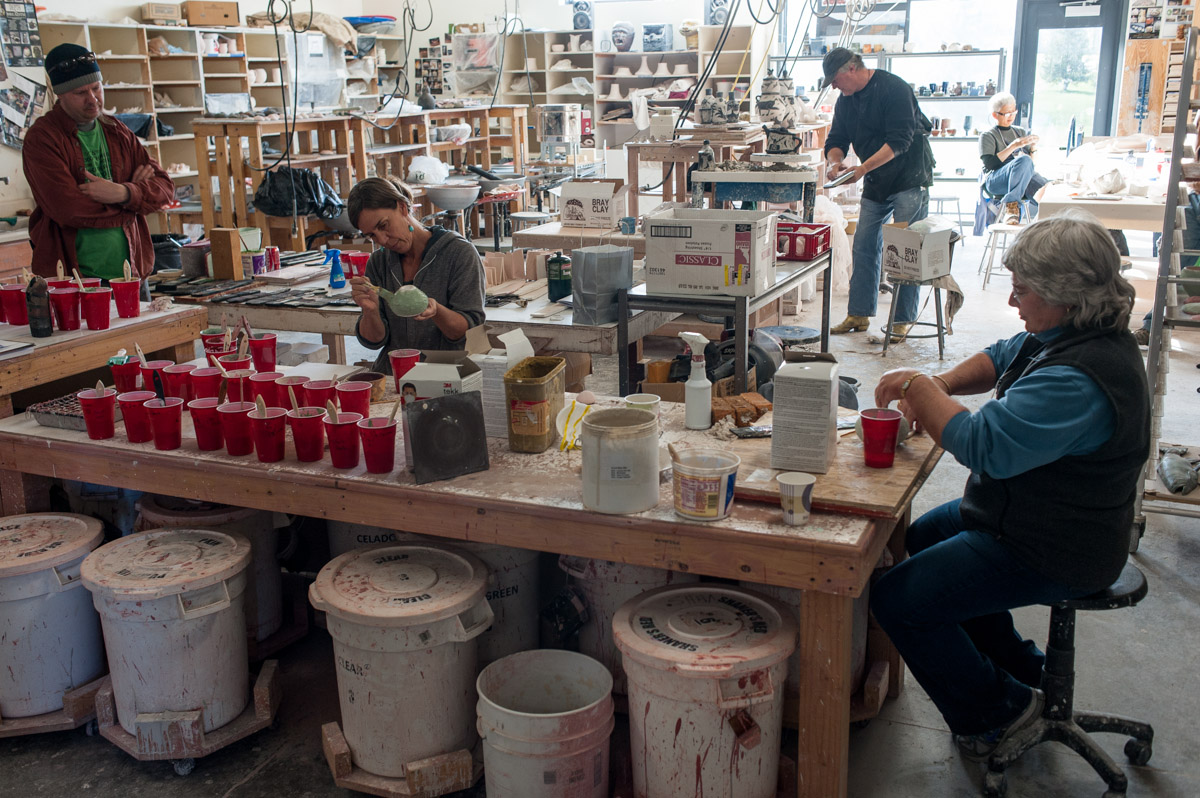
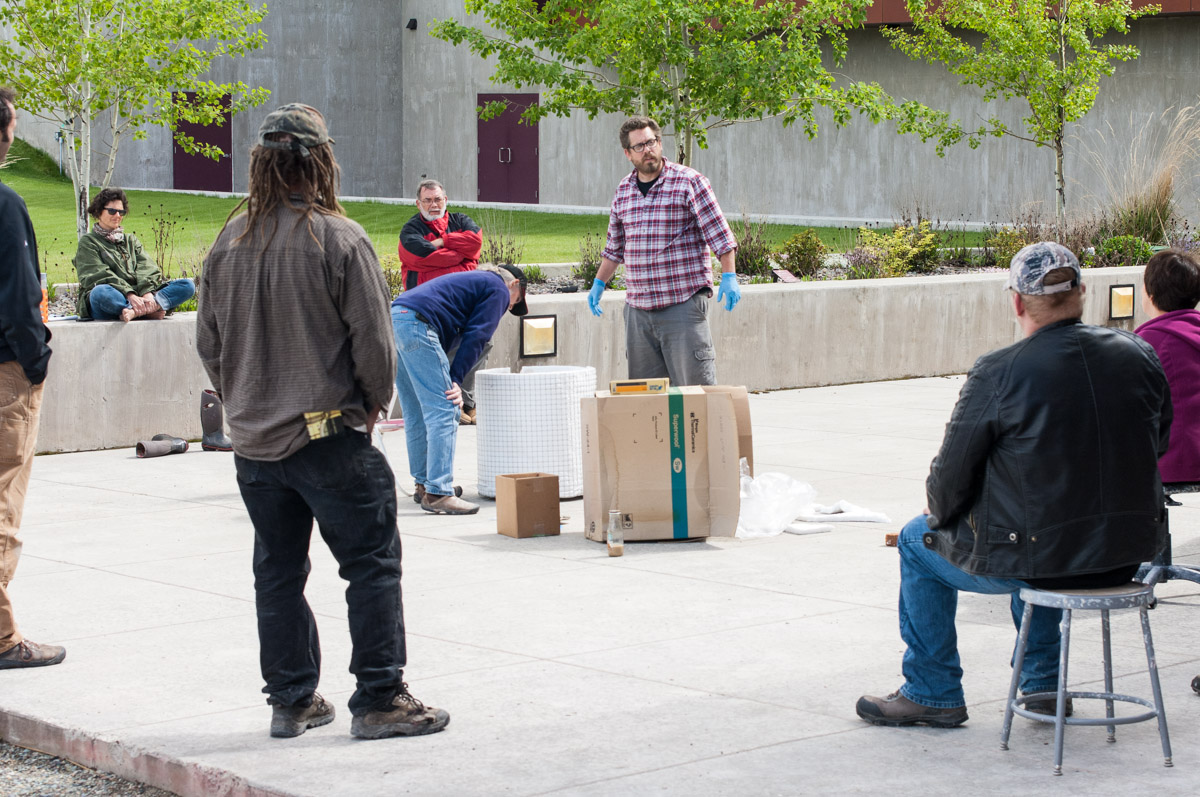
It was my pleasure to cover a pottery-firing event in Kalispell not too long ago for Montana Quarterly magazine. Lots of artists from all over gathered to talk about technique, about vision, about art, and then they made some really big fires and out came some really wonderful pieces.
Odds And Ends and Thanks
Over the weekend, my pal Al Kesselheim and I were flattered to win the 2013 High Plains Best Art & Photography Book Award for Montana: Real Place, Real People.
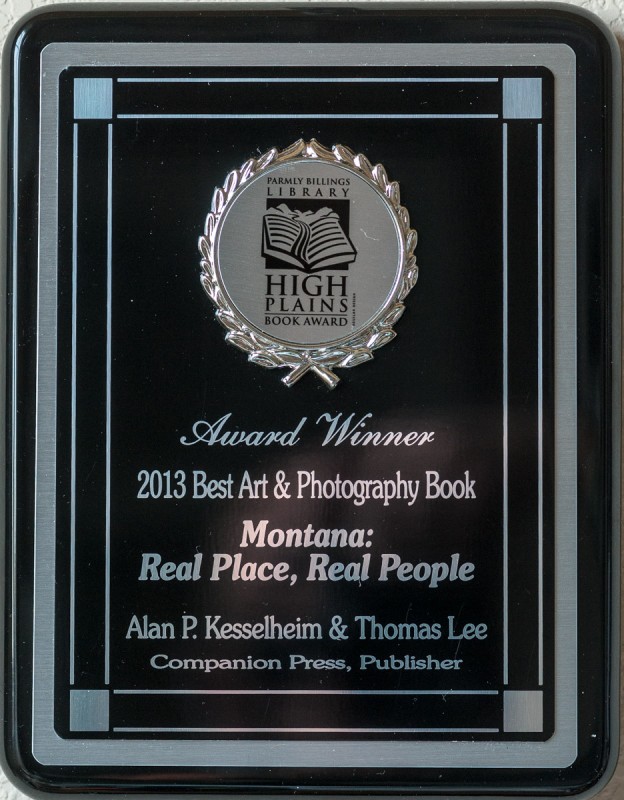
The contest drew entries from publishers all over, including the really big names in New York, and it exists to recognize works which “examine and reflect life on the High Plains.” That includes Montana, North Dakota, South Dakota, Wyoming, Nebraska, Colorado and Kansas, as well as the Canadian provinces of Alberta, Manitoba and Saskatchewan.
Many of you know that most of the work in this book was done for Montana Quarterly magazine, for which Al and I are both extremely grateful. And we’re also glad to continue to work for that great publication, now owned by our friend Scott McMillion.
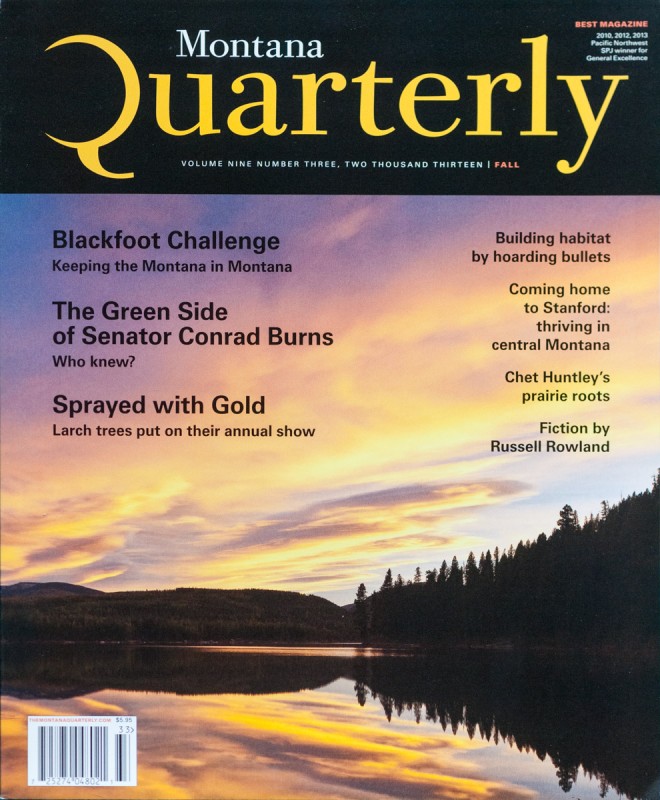
And I’ve just finished posting the Four Corners of Montana series we were lucky enough to do for Sheila Habeck and Montana magazine’s September/October issue:

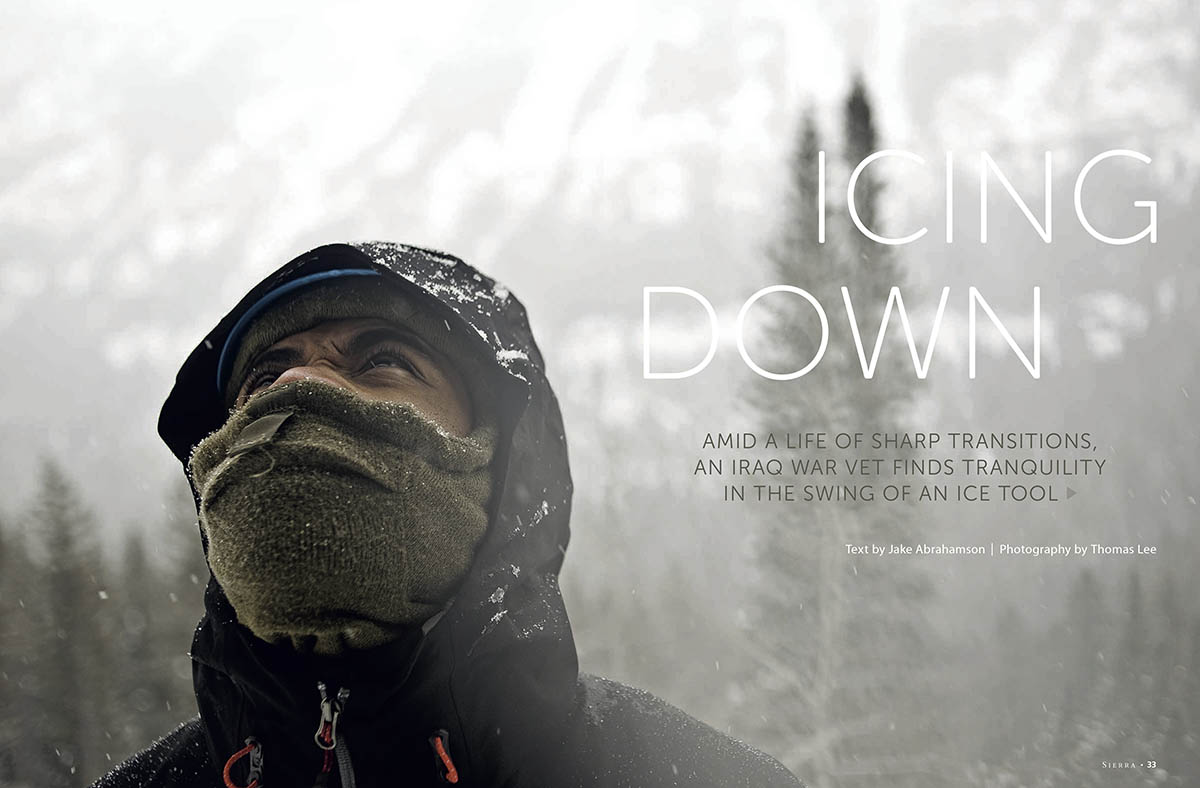
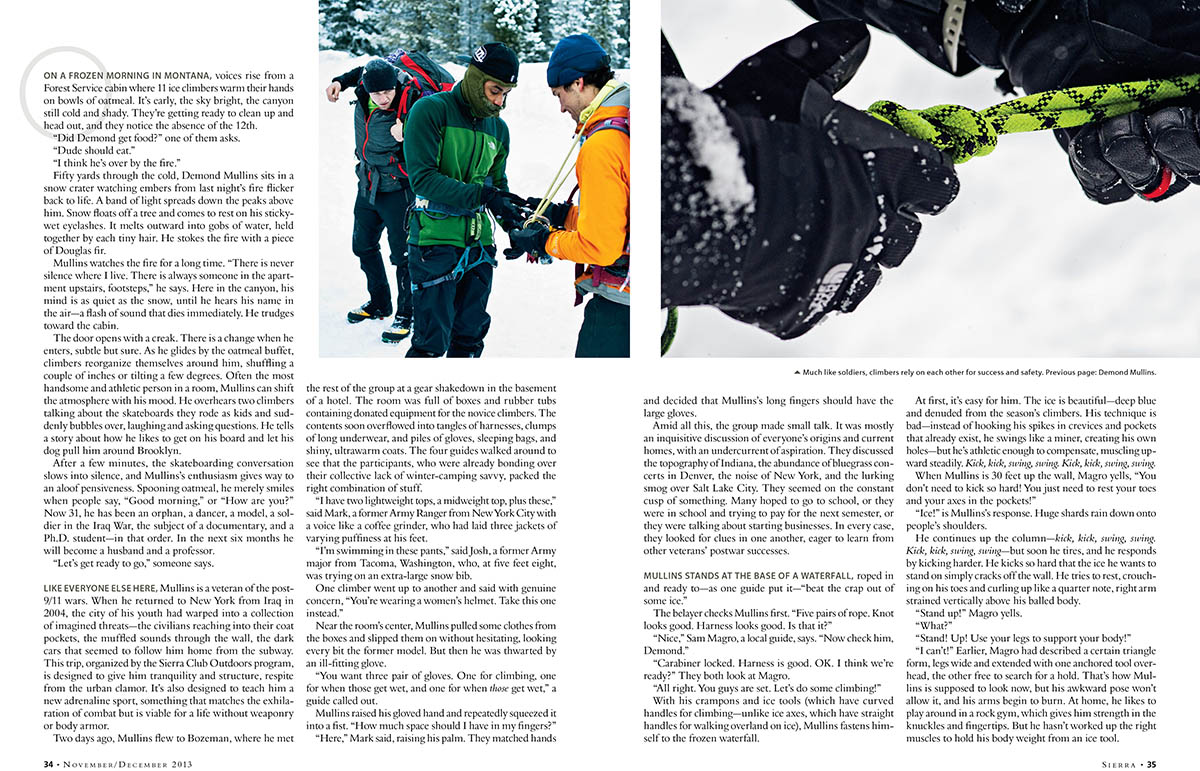
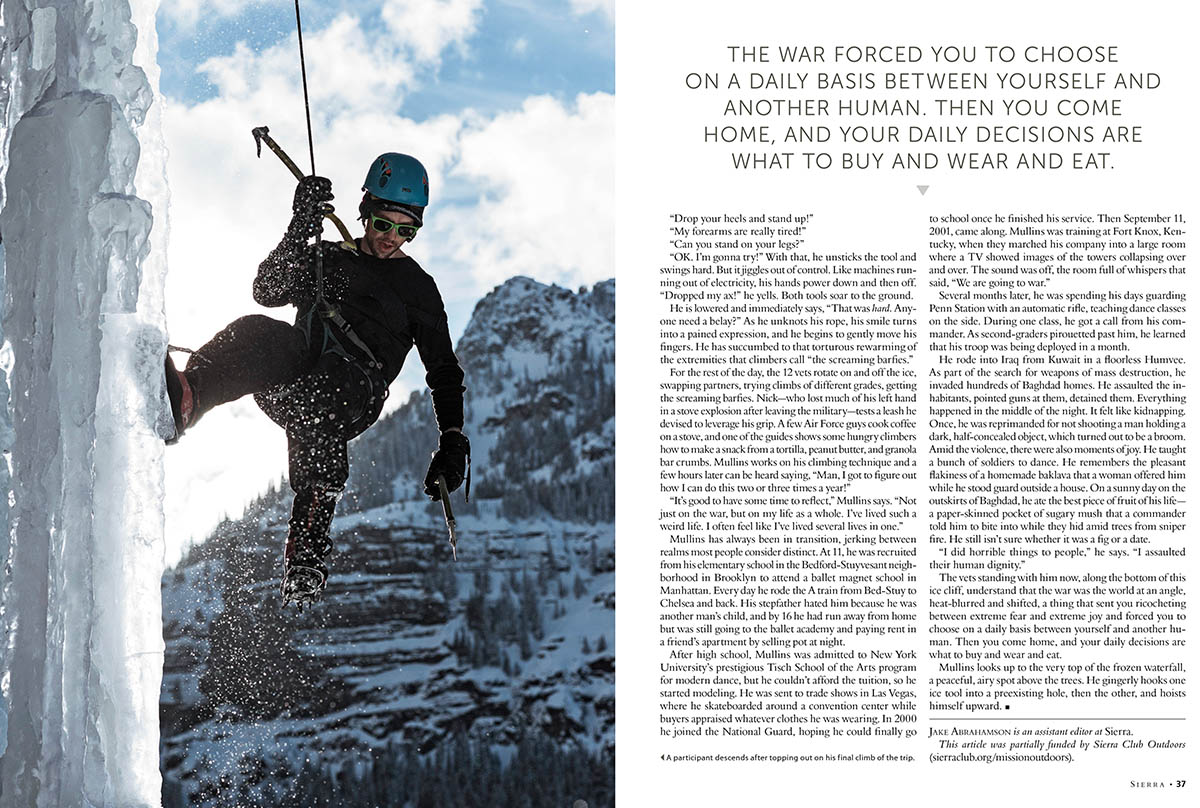
Then I come home to find the current issue of Sierra magazine in my mailbox, inside of which is a wonderful story about an Army veteran on an ice climbing trip in Hyalite Canyon that I shot last winter:
And I’ve also connected with some great commercial clients recently to do some fun and meaningful projects both in the recent past and hopefully, in the not-too-distant future.
It occurs to me how lucky I am to be working with such fine people on such wonderful projects that are appreciated in such wonderful ways.
I wish every one of you who’ve read this far (oh hell, even those who didn’t) as happy and fulfilling an existence. And to all of those who have made my existence so happy and fulfilling, thank you. What a wonderful thing you’ve done.
Related articles
- Miles City native snags two book awards (billingsgazette.com)
Southeast — Character
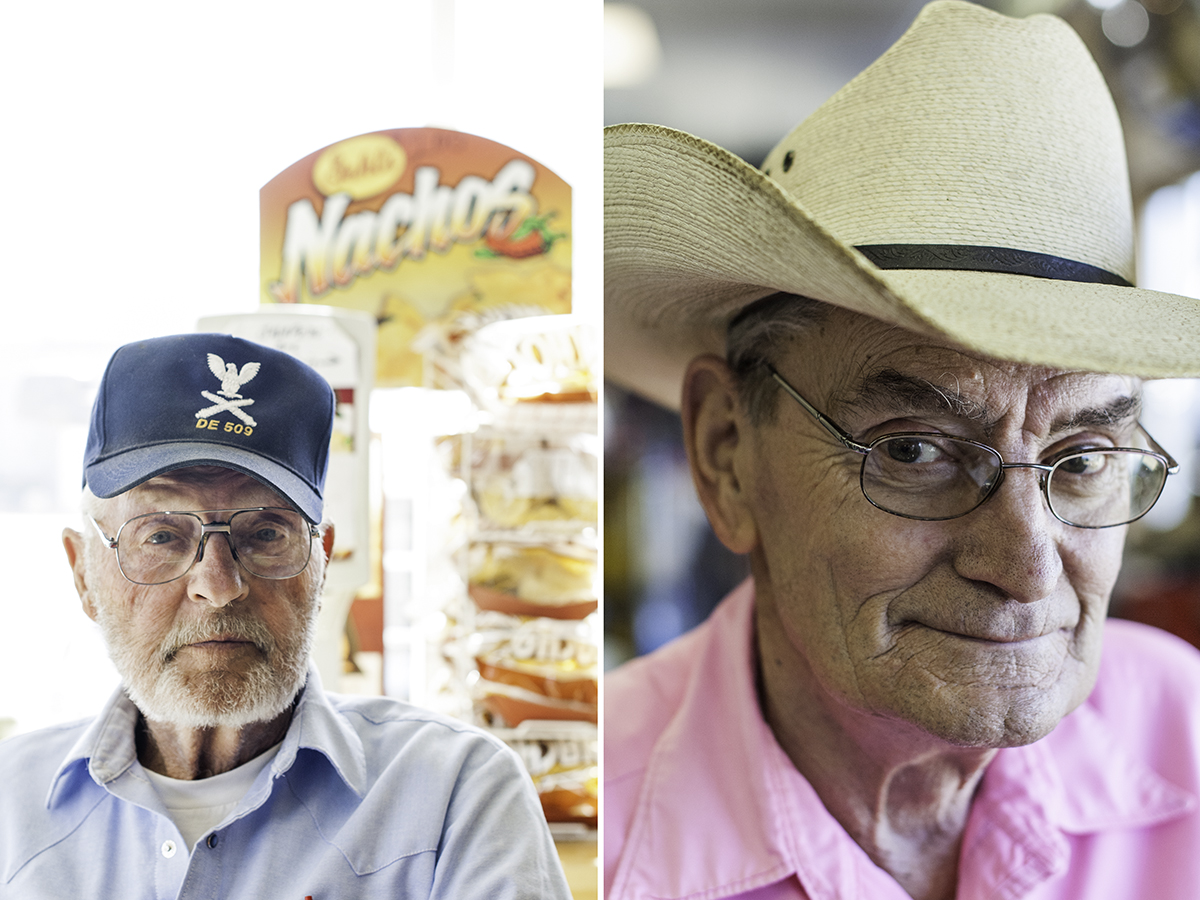
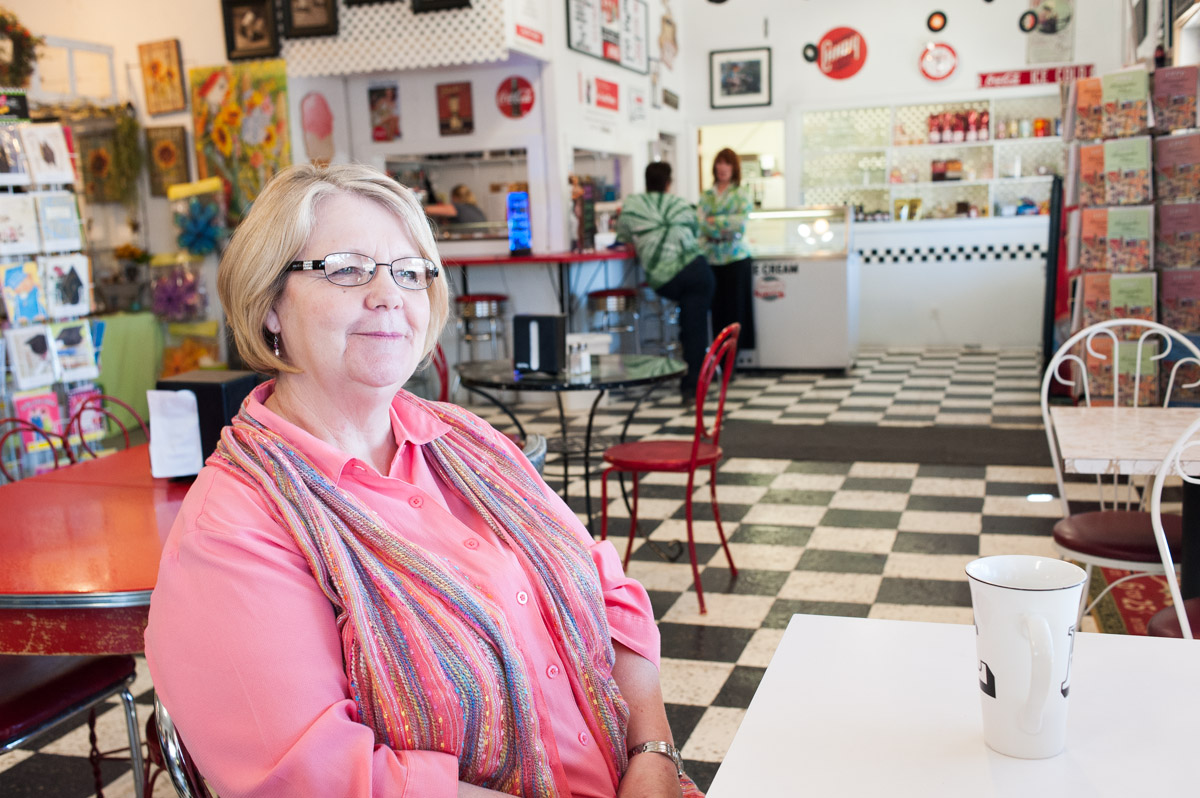
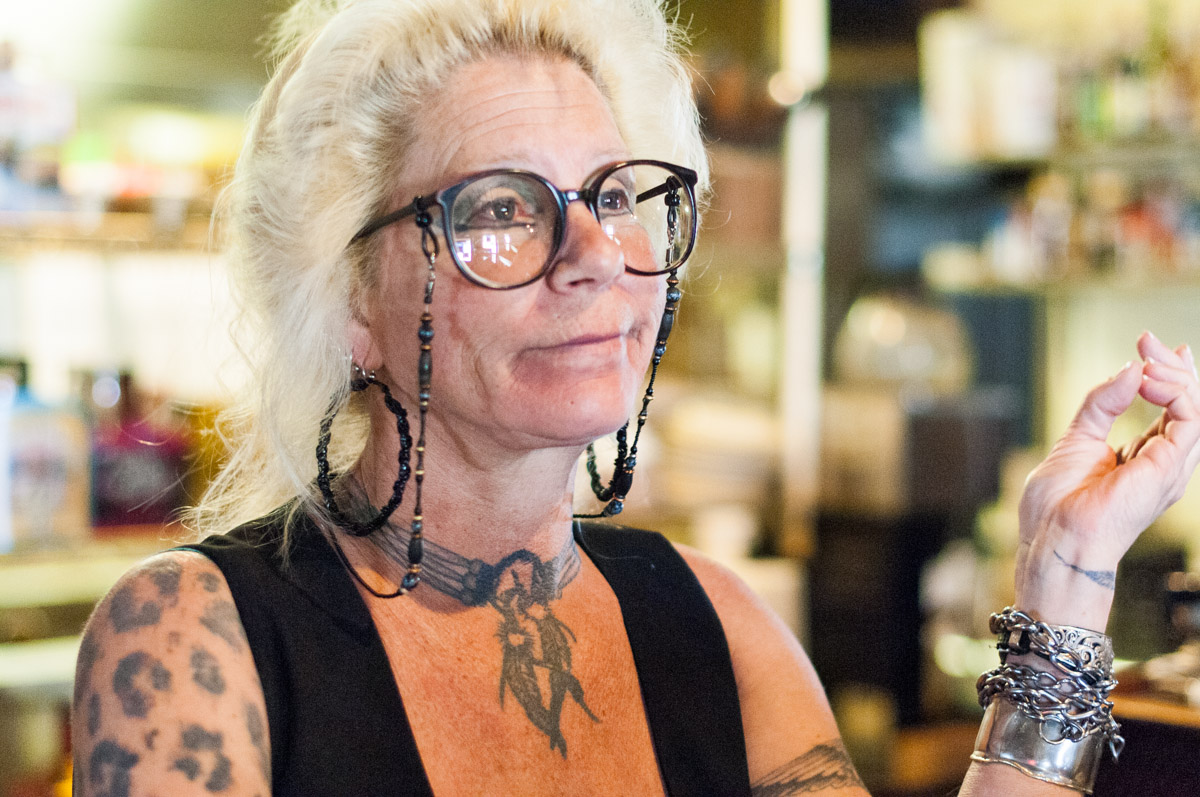

Southeast Montana is a land of character.
Eighty-six-year-old Lyman Amsden, top left, manages the Corner Store in Broadus. A Broadus native and WWII veteran, Amsden says he has hope for better times in Broadus in the future, but no expectations for any big changes.
Wearing his cowboy hat while working behind the counter at the Corner Store in Broadus, Ken Johnstone, 64, says he’s a cattle rancher when he’s not behind the counter. “I love eastern Montana,” he says. “I just never thought about going anyplace else.”
Laura Lee Ullrich, 60, owns the Copper Moon gift and antique store in Broadus, selling what they bill as “the best milkshakes in 500 miles.” She says people are the diamonds in southeast Montana’s crown. They are are resourceful, bloom-where-you’re-planted folks.
And then there’s Diane Turko, who owns and runs the Stoneville Saloon in Alzada all by herself.
Perhaps the brightest prospects for southeast Montana are embodied in the future of Ekalaka native Nate Carroll, who is acting curator of the Clark County museum, while also beginning graduate work in paleontology at Montana State University in Bozeman. Carroll says southeast Montana is rife with dinosaur fossils and he’s been studying them since he was a kid working on his family farm and ranch. Now he is looking toward positioning the museum to lead Ekalaka into the economic world of paleotourism, hoping to draw visitors to hunt for the abundant fossils in the area.

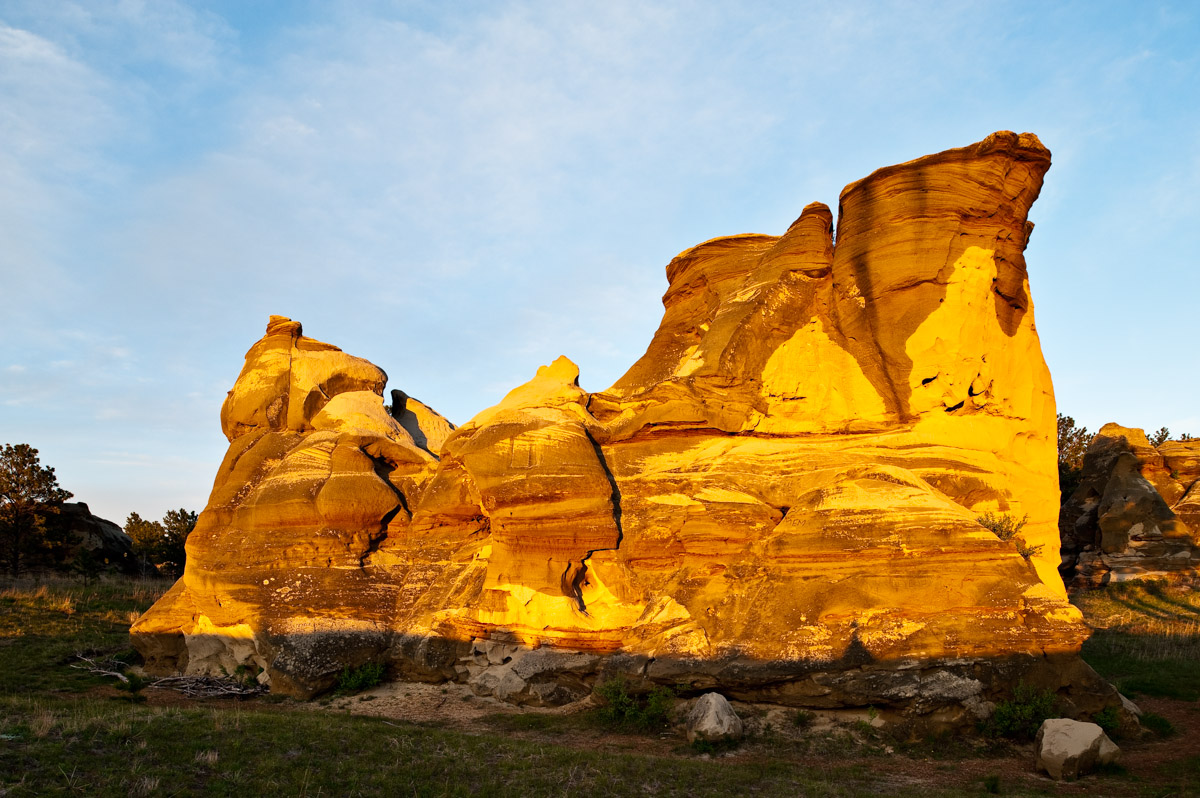

Southwest — Landscape
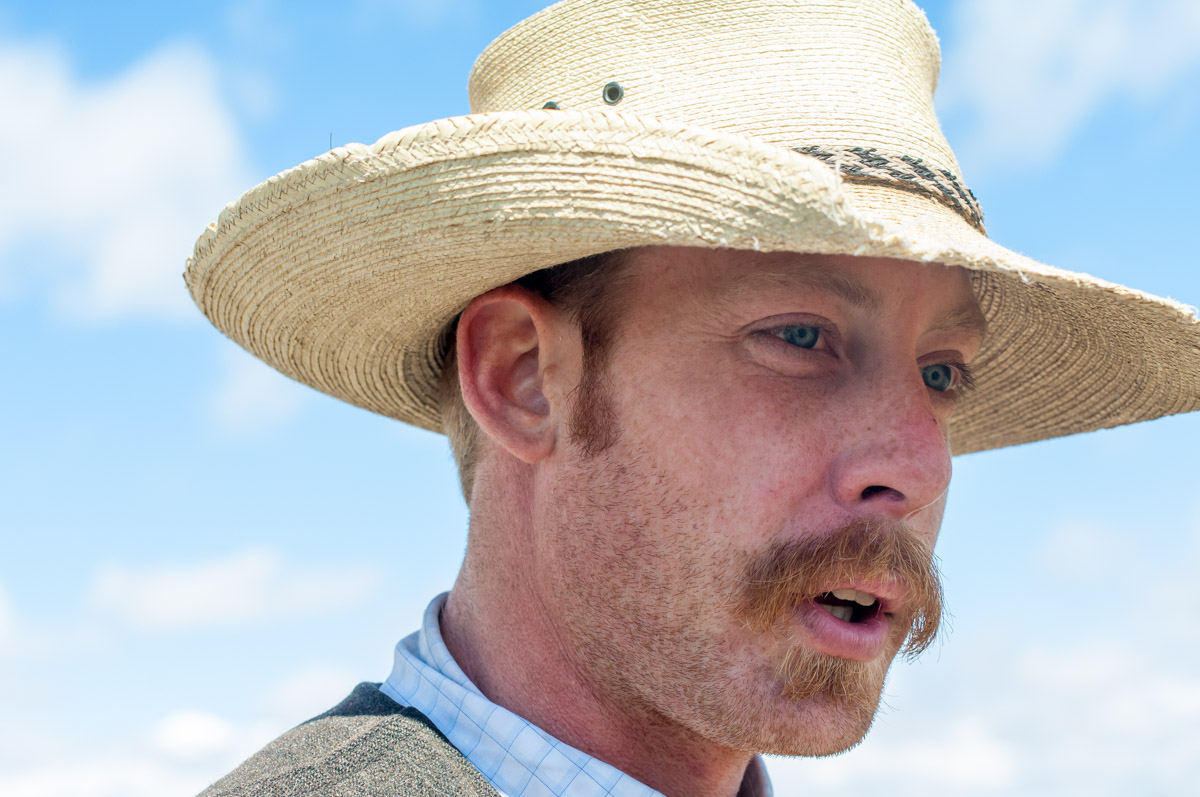
I think the corner of Montana with the most dramatic landscape has to be the southwestern portion of our state — which arguably isn’t a corner at all, just kind of a slant from Yellowstone up toward Missoula.
But that slant is the Continental Divide and it includes the spot Lewis and Clark and their party, on their way west in 1805, finally found the headwaters of the mighty Missouri River. The spot where they had hoped to see an easy, navigable passage to the Pacific Ocean. And instead, they found this:

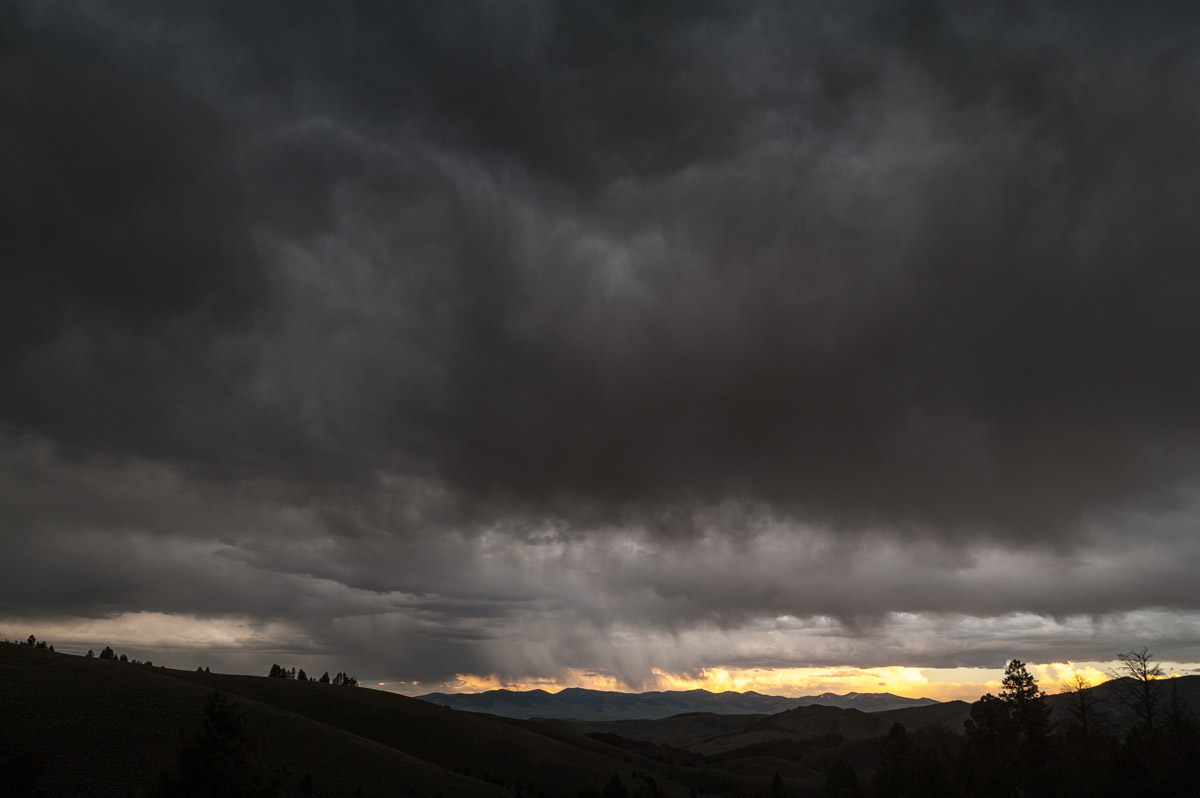
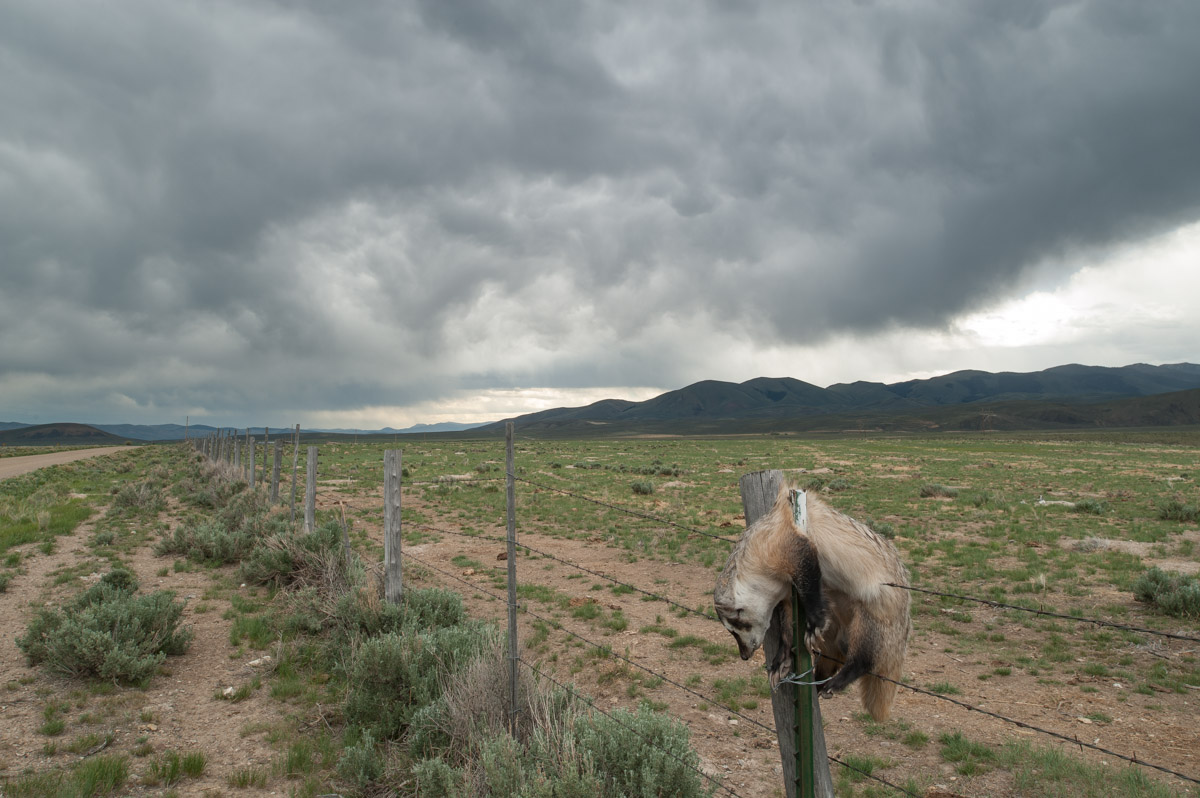
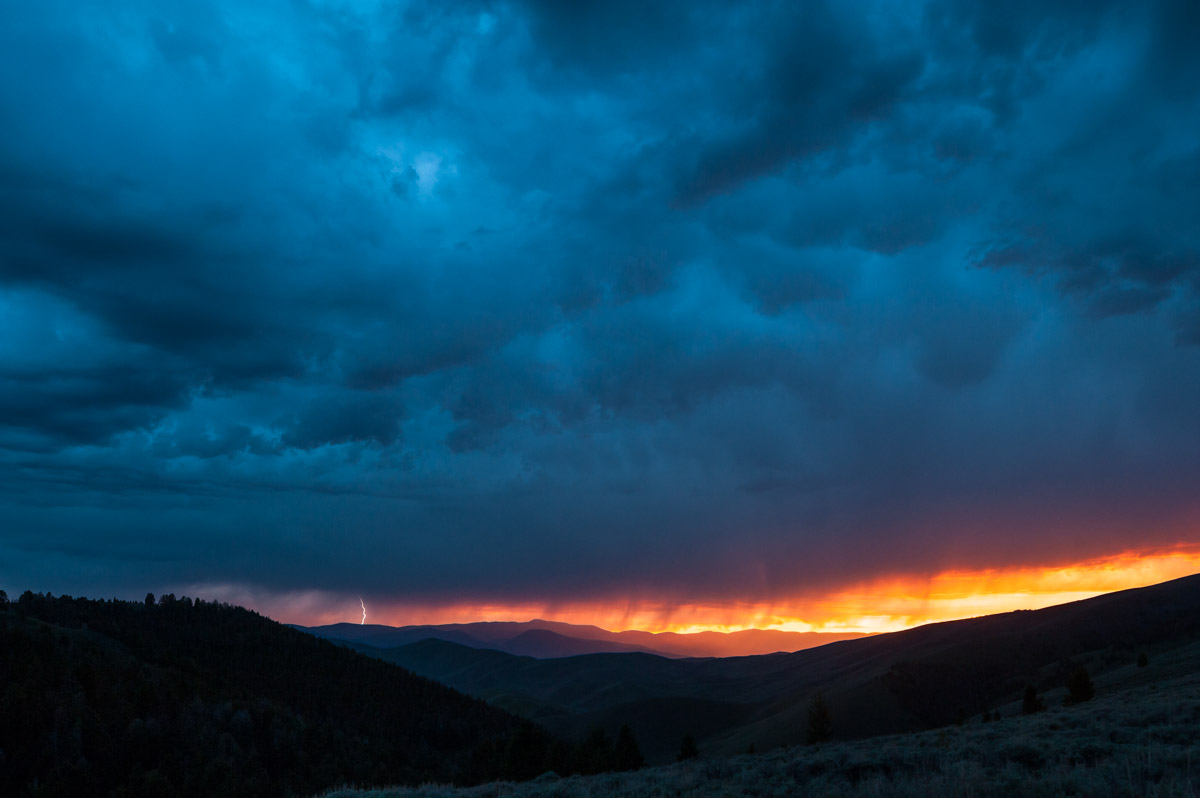 I don’t know that there was a thunderstorm waiting for them like there was for me, but when I stood atop Lemhi Pass and thought about the miles and miles of Missouri River they had climbed from St. Louis to get to this point, with winter coming on, I could just hear them say, “Oh, shit.”
As you may already know, they found a way across these mountains, made it to the Pacific Ocean at the mouth of the Columbia River and the following spring, crossed back into Montana and then down the Missouri to St. Louis. It was a harrowing journey that nearly cost them their lives, but they made it.
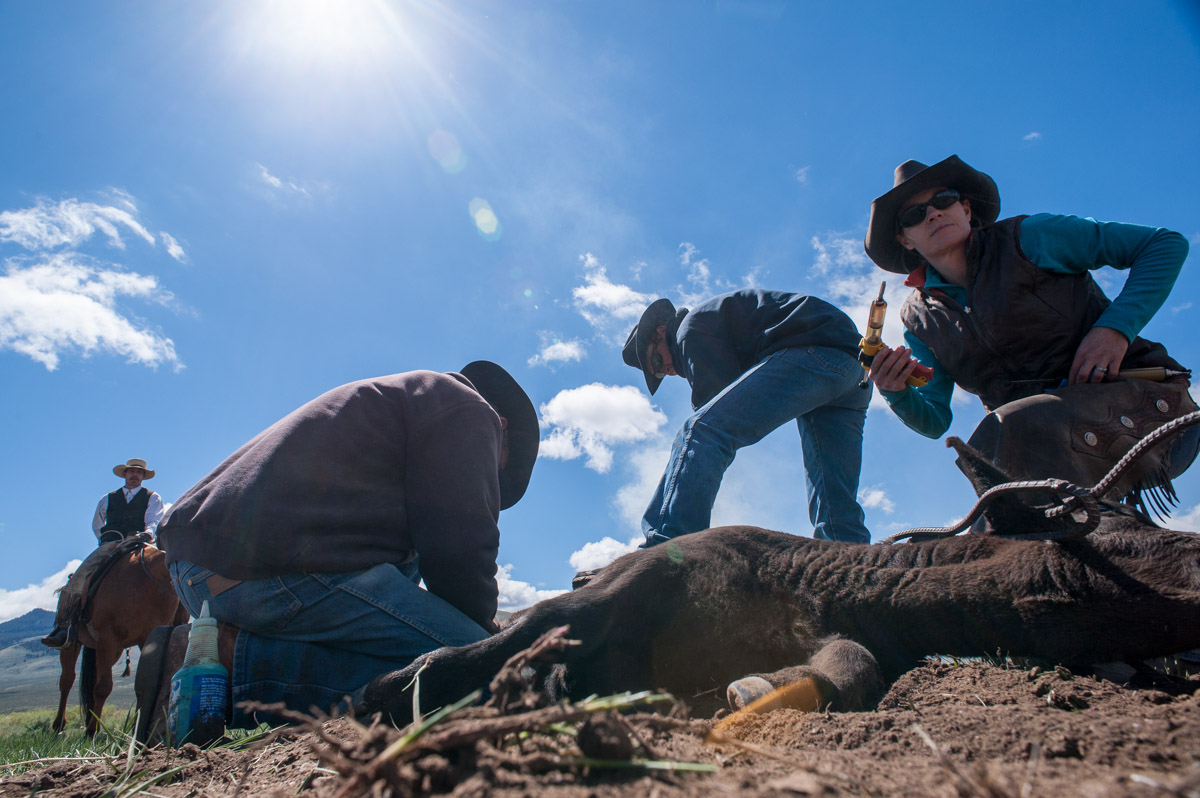
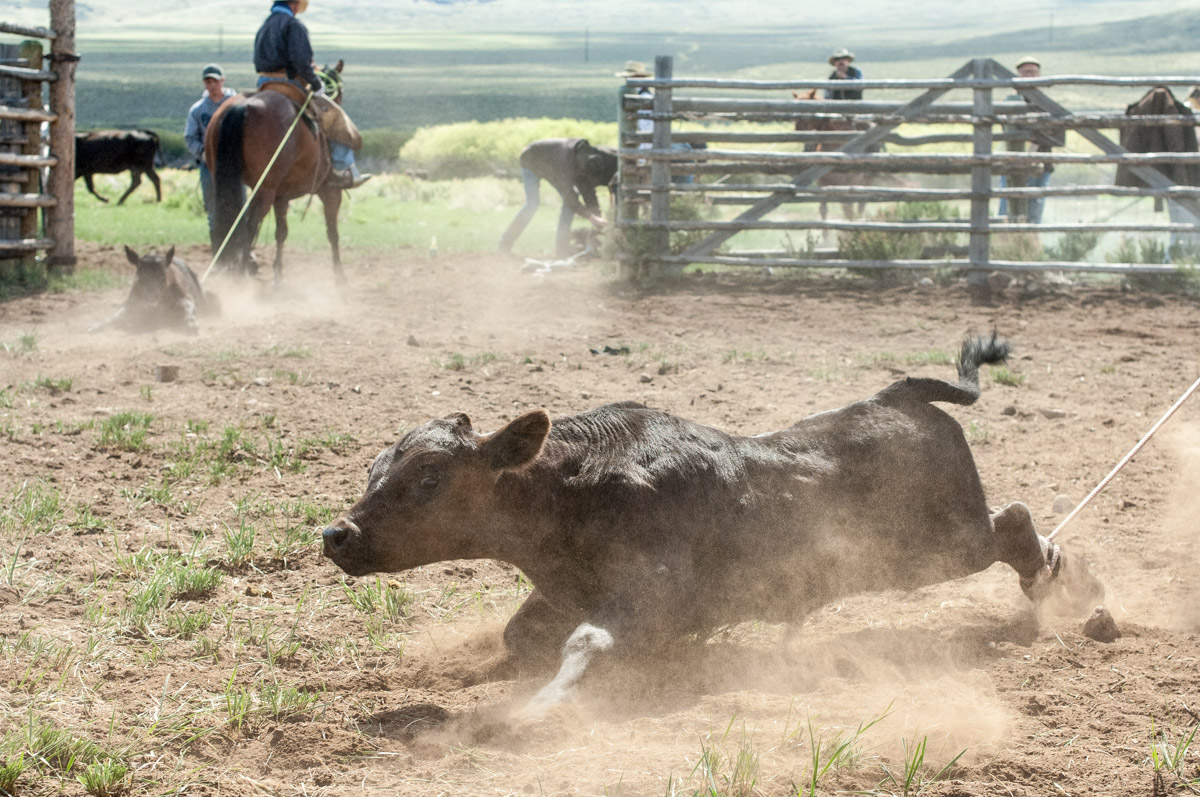
Still, in the more than 200 years since they walked through what is now southwest Montana, the landscape is still foreboding and awe inspiring. As are the people that have found a way to make a living there.



Northeast — Patience
 This is the second of four posts I’ll do on the four corners of Montana, a project Al Kesselheim and I were proud to do for Sheila Habeck and Montana magazine.
The northeast corner of Montana has a history of booms, beginning with the fur trade that followed closely on the heels of Lewis and Clark. Then the railroad brought homesteading farmers and ranchers at the beginning of the 20th century. Now, oil in the Bakken formation is changing the economy, the landscape.
Yet if you stand in a wind-scoured wheat field up there, you can hear the faded optimism of booms gone bust, see time etched into shapes and faces, feel the patience, the endurance, the persistence that is required to live here.
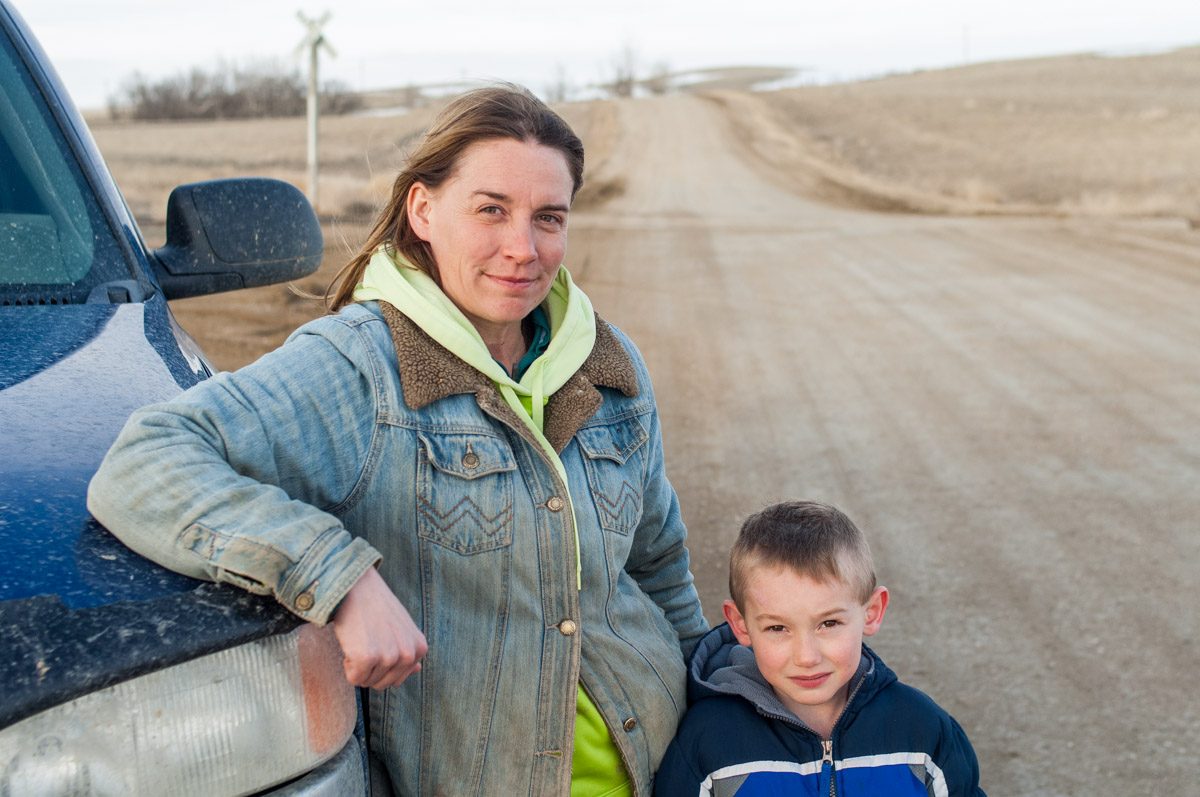
Talli Else, above with her 6-year-old son, Cade Schwarzrock, and family are raising cattle and grazing horses on Else’s grandrather’s old farm near McElroy. Else said her father was growing grain on the land as well, but that the bulk of the family’s income is coming from the trucks her husband and father drive, hauling hay, grain and cattle.
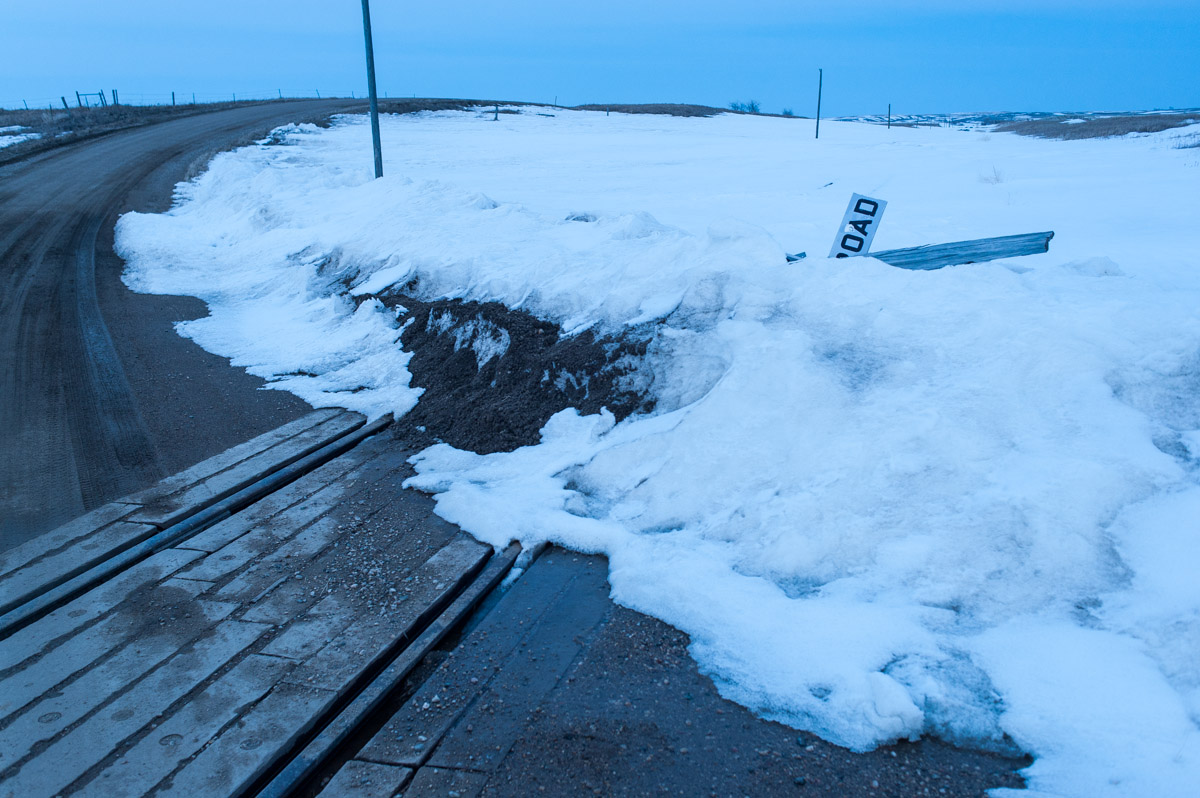
The railroad brought homesteaders to northeast Montana during the early 20th century, but is now used infrequently.
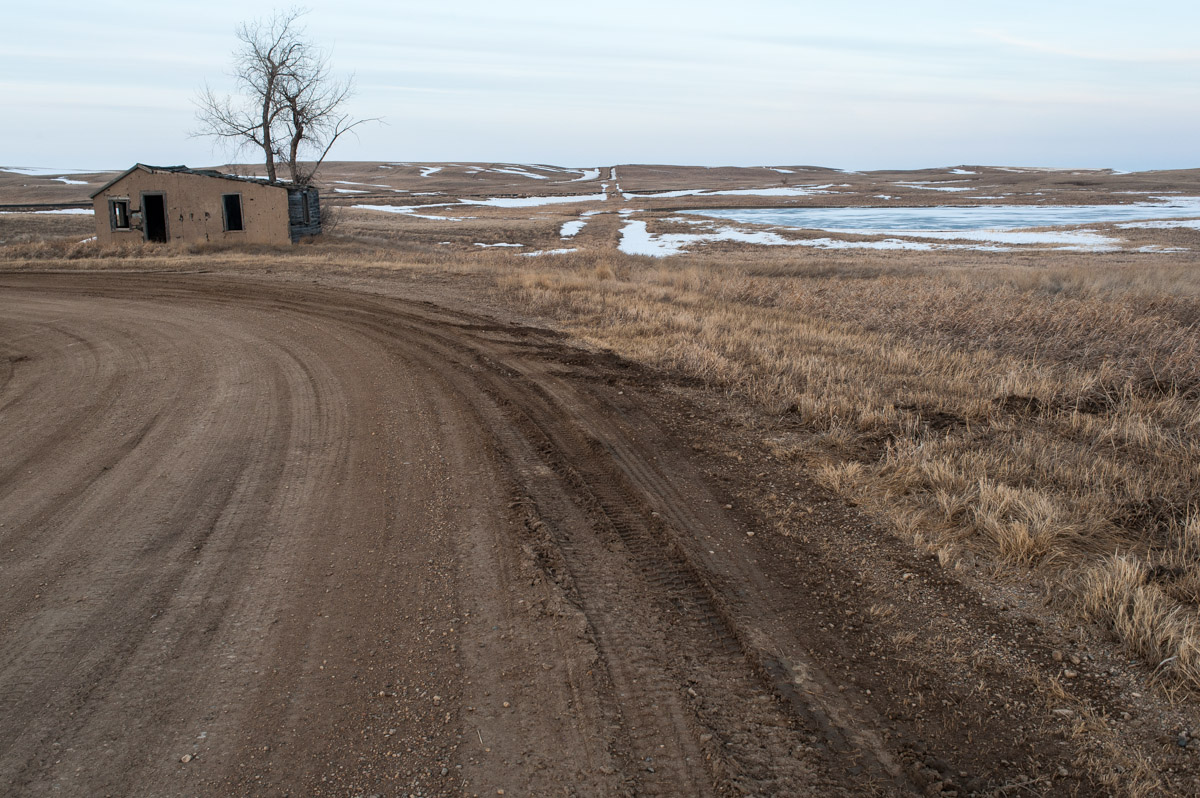
It left behind towns like Comertown, founded in 1913 along the Soo Line, but already in decline by the end of the 1920s.
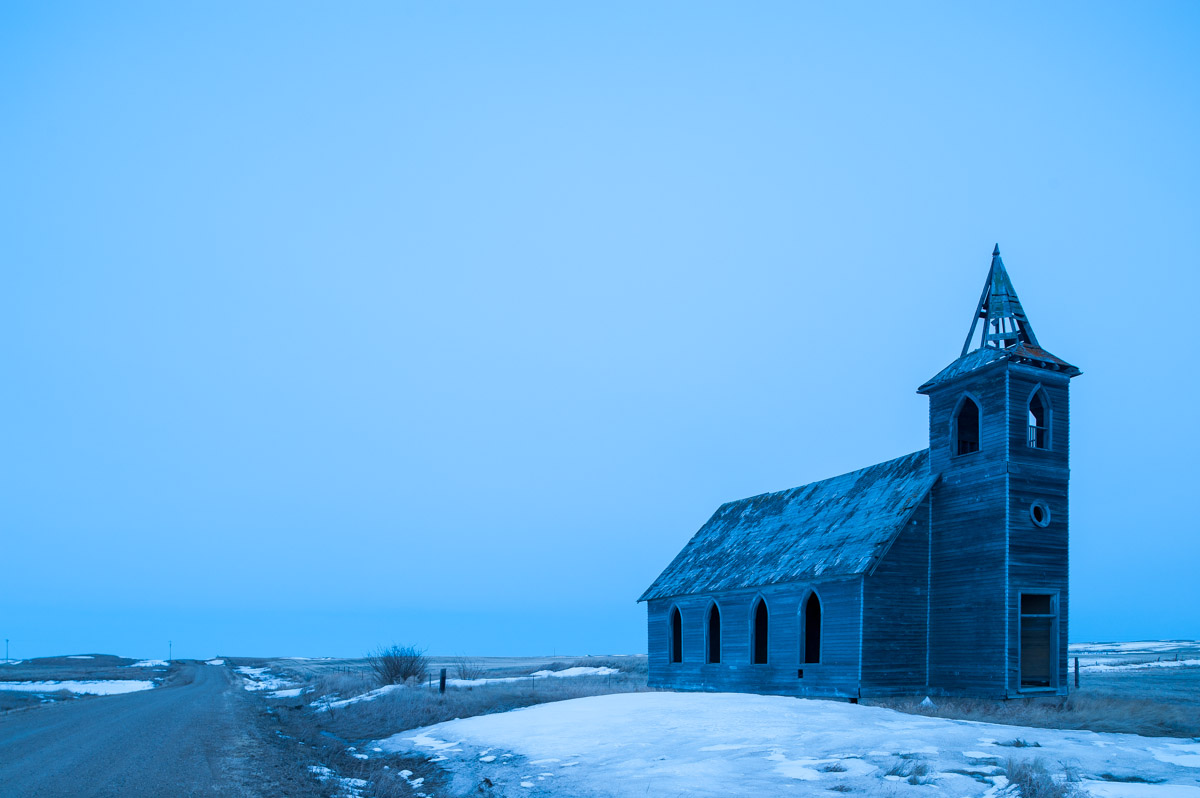
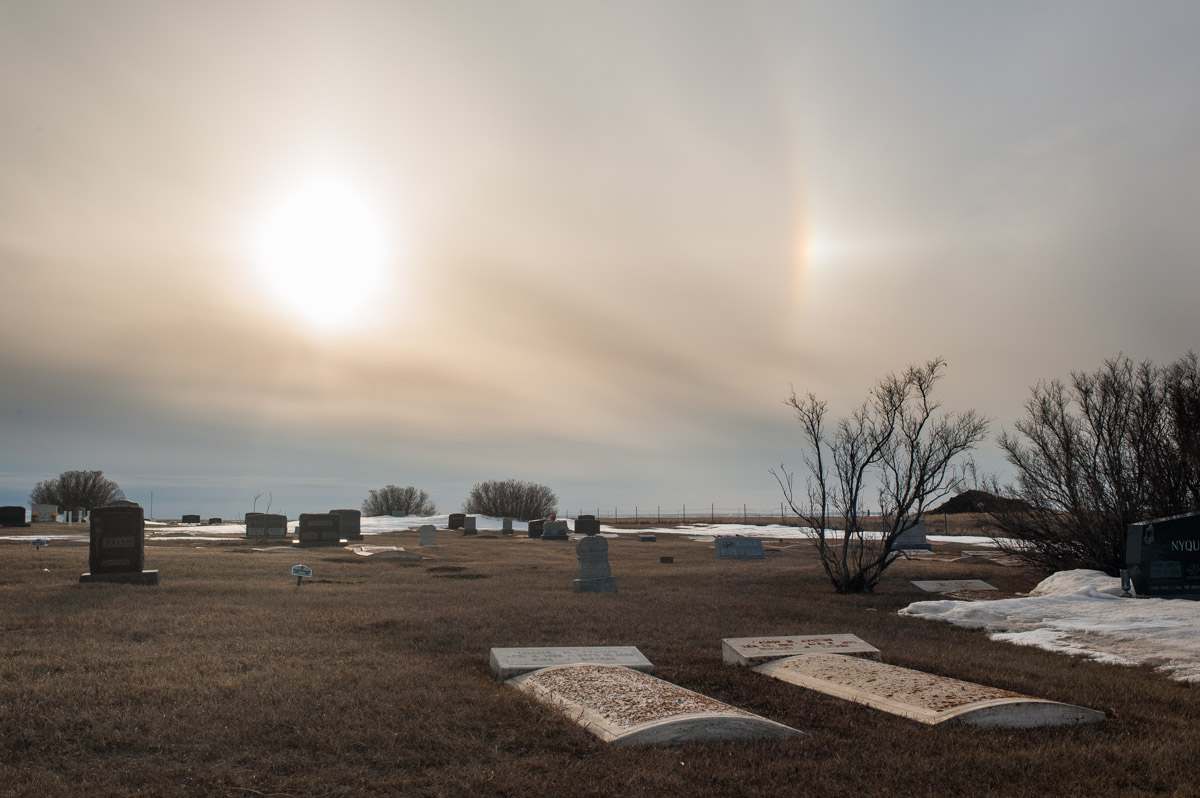
The old Rocky Valley Lutheran Church is all that remains of what used to be Dooley, just a bit farther west along the Soo Line.

But people hang on. Like Tim Hutslar of Medicine Lake. Hutslar, who sells liquor to pay the bills in the voluminous old hardware store he owns. The store offers ample space for Hutslar to display his collections of toys and artifacts. And when he’s not selling whiskey or dusting his collections, Hutslar is active in a golden retriever rescue organization, ministers for three local churches and has been mayor of Medicine Lake since he won a write-in campaign 12 years ago. “I think eastern Montana has always been kind of a hide-out area,” he says.
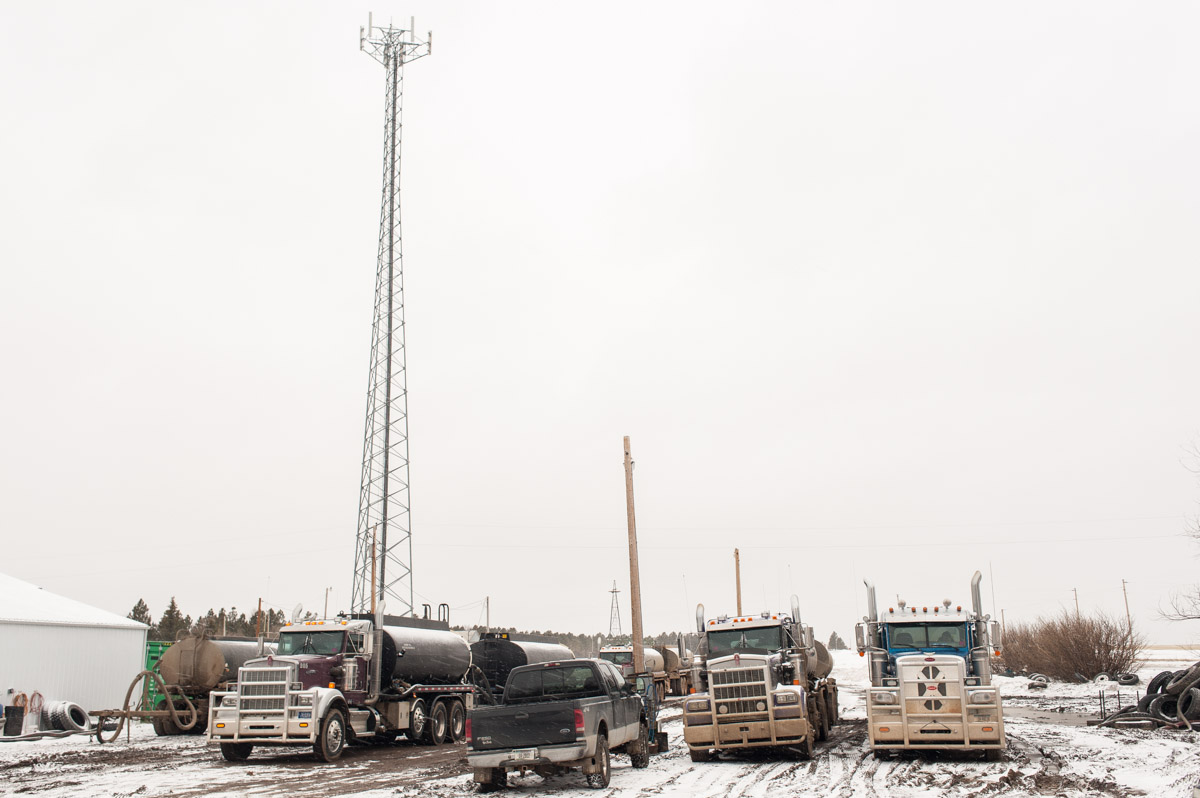
“Serving the oil industry since 1960,” reads the sign above Justice Oilfield Water Service, Inc., in Dagmar. Oil has been a part of the northeast Montana economy since the 1950s. But the discovery of a way to economically drill horizontally under ground has opened up vast reserves of oil in western North Dakota and extreme eastern Montana.
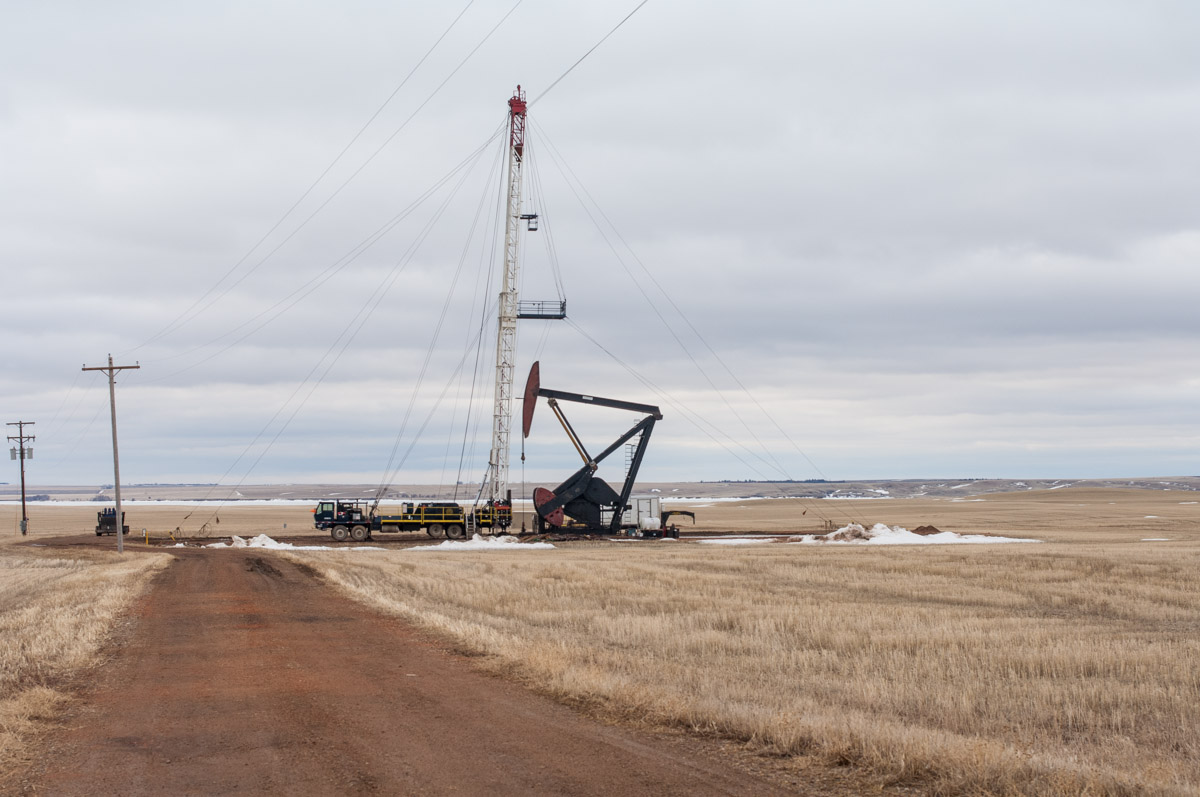
That expansion makes sights like this oil derrick all the more common.

And it brings in man camps like this one just west of the North Dakota line.
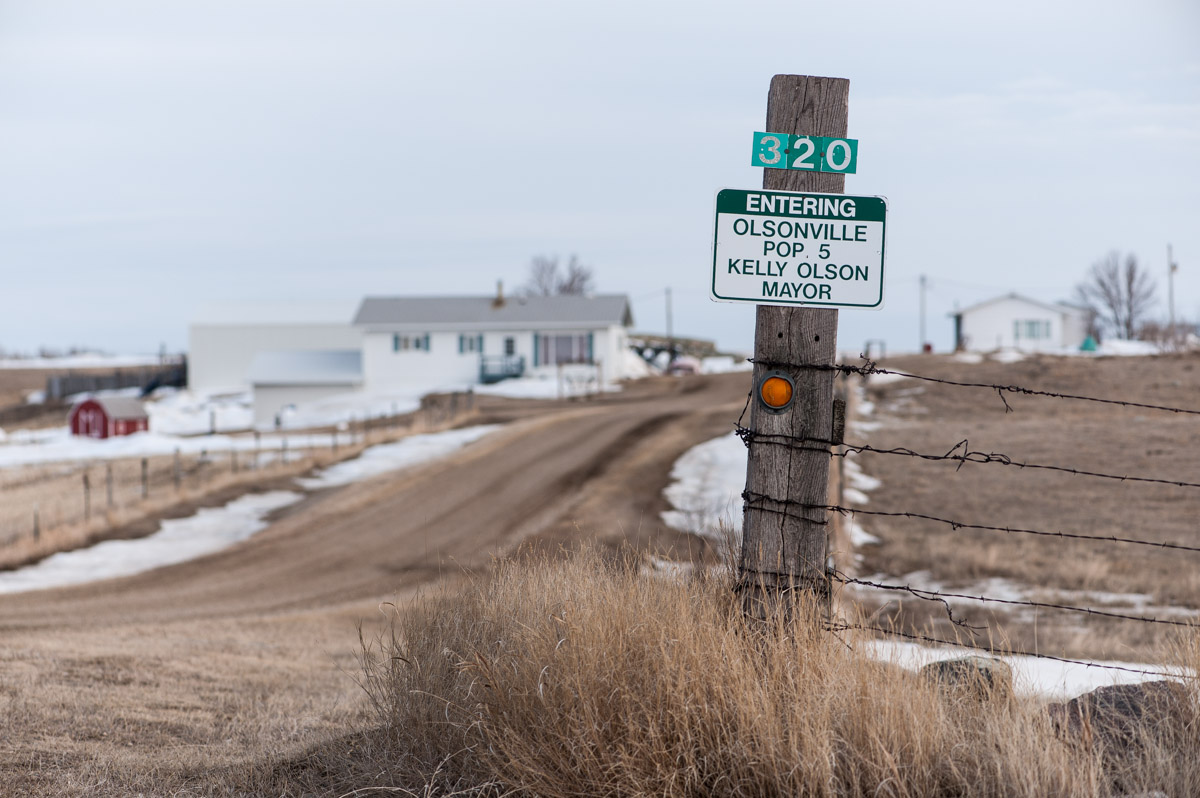
But those who have stuck it out the longest know that time passes, and brings change. You might as well keep a sense of humor.
Eureka!
I’m so proud to be in the current issue of Montana Magazine. I’m prouder still to be able to say that my good friend Al Kesselheim and I are hogging the entire issue.
Several months ago, editor Sheila Habeck approached us with a project to cover the four corners of Montana and that project now takes up the entire September/October issue of Montana Magazine. What a treat to explore this wonderful place and attempt to distill the qualities that make it so special. We found community, history, character and landscape qualities unique to each region and at the same time, common to the whole state.
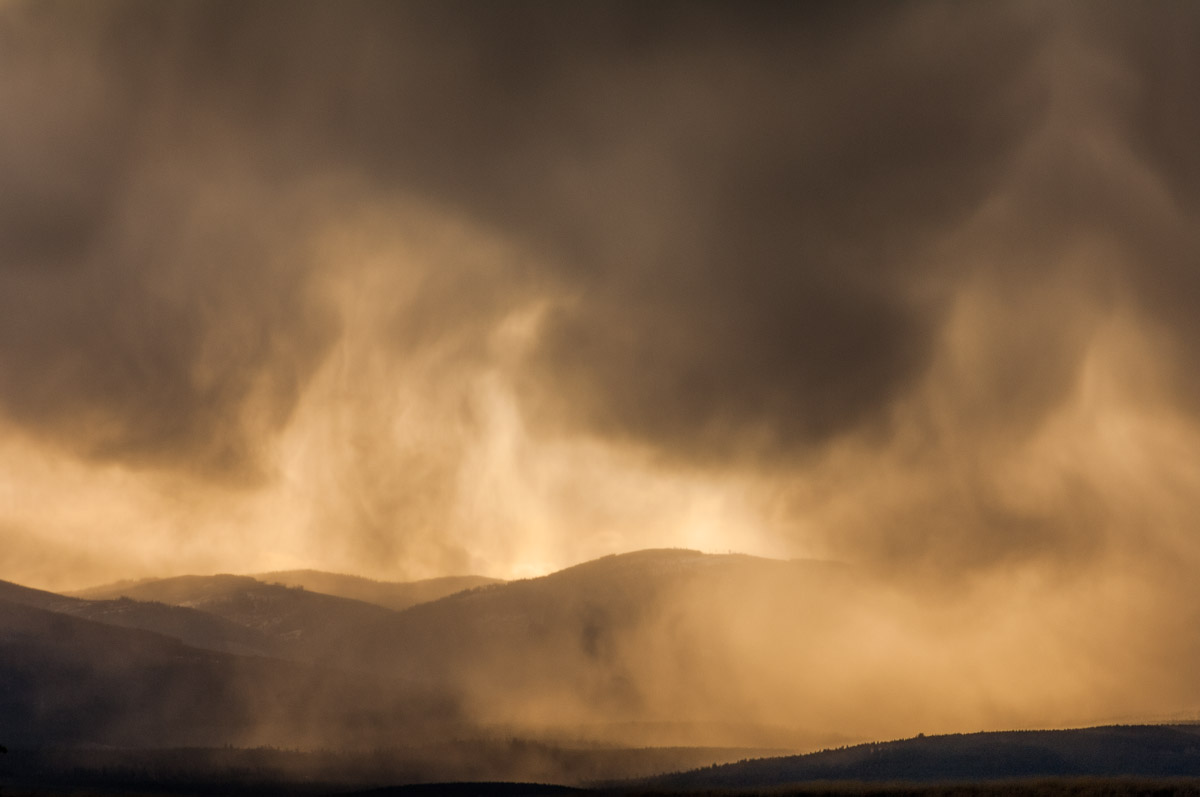
Eureka, in the northwest corner of the state, exemplifies the sense of community we’ve found throughout our state. Like many towns, Eureka’s economy is a little stormy — like this spring storm lingering over the Purcell Mountains nearby. Residents are struggling to adapt to an economy moving away from it historic roots — timber in Eureka — and into new places like tourism.
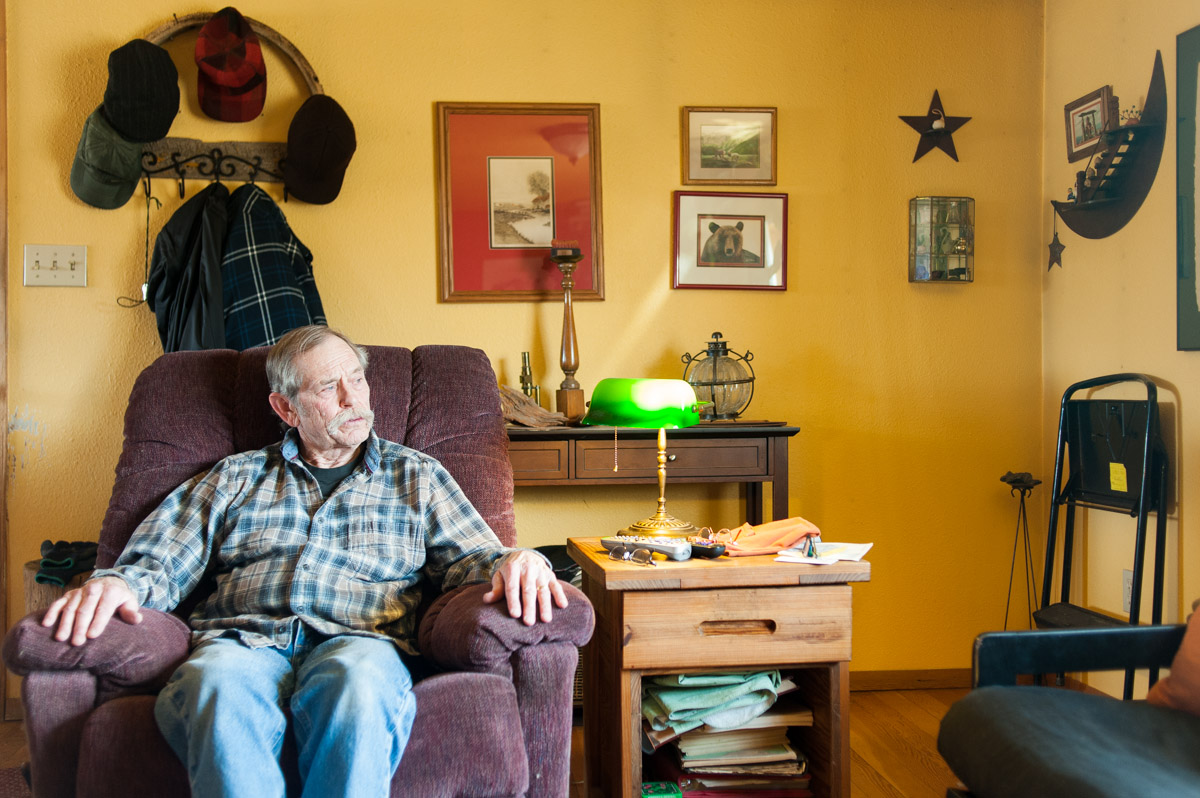
Historian and publisher Gary Montgomery, a Eureka resident for more than 40 years, says people around Eureka find ways to get along. “We’re constantly thrown in together” he says. “There’s just not enough going for people to choose sides.”
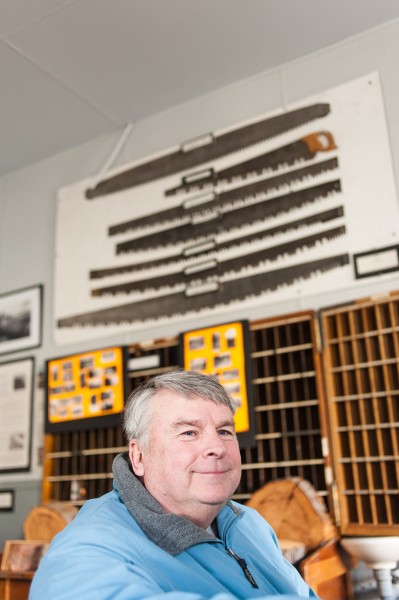
“I kind of feel like Eureka is a little lost,” Darris Flanagan says. “We exist now primarily on the Canadians. There’s still pride. But I think we’re searching — as an area — for something.” Timber and the Christmas tree industry was a big part of the town’s identity on into the 1990s. “There was a lot of pride” in Eureka trees, Flanagan says, but those days are all but gone.
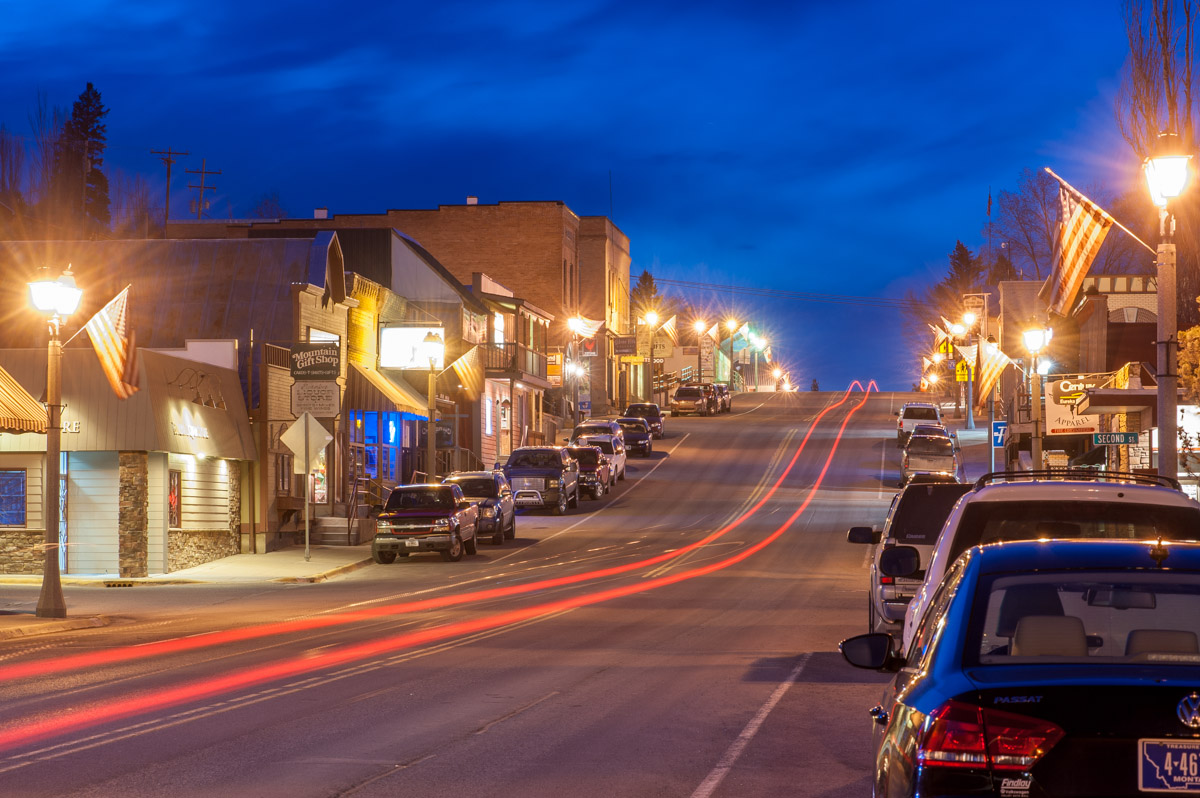
Mr. Flanagan says a big effort has been made to spruce up Eureka’s downtown. And while many Eureka residents choose to commute to jobs 65 miles away in Flathead County, he expects Eureka’s economic priorities to shift toward tourism and recreation in the future.

Eureka is just a few miles from the Canadian border, and American liquor and cigarettes are popular with our neighbors to the north. Dave Clarke runs the First and Last Chance, a bar and duty free store right on the Canadian line, and his dog Bear has been keeping vigil through all kinds of weather for 14 years.
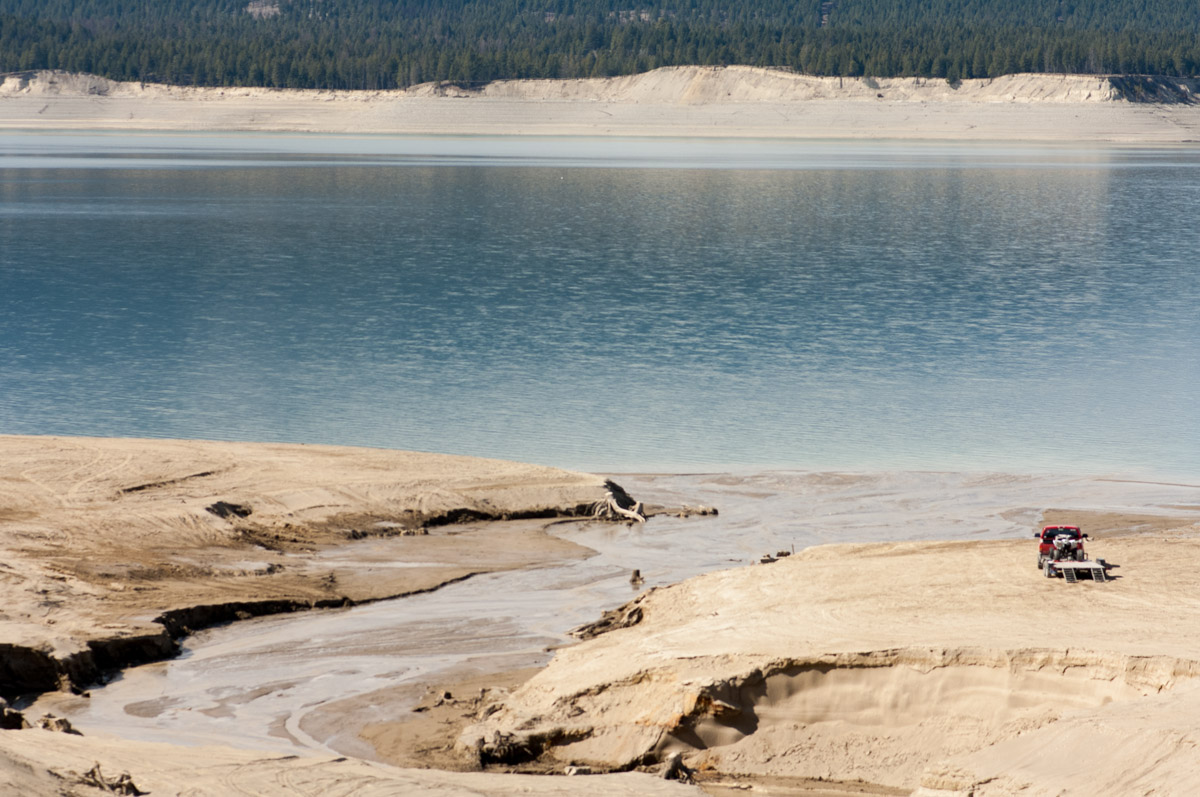
One industry that is being courted by Eureka is outdoor recreation. The sands along the shores of Lake Koocanusa (Kootenai, Canada, U.S.A.) provide a big playground for motor sport recreation, drawing folks from near and far.
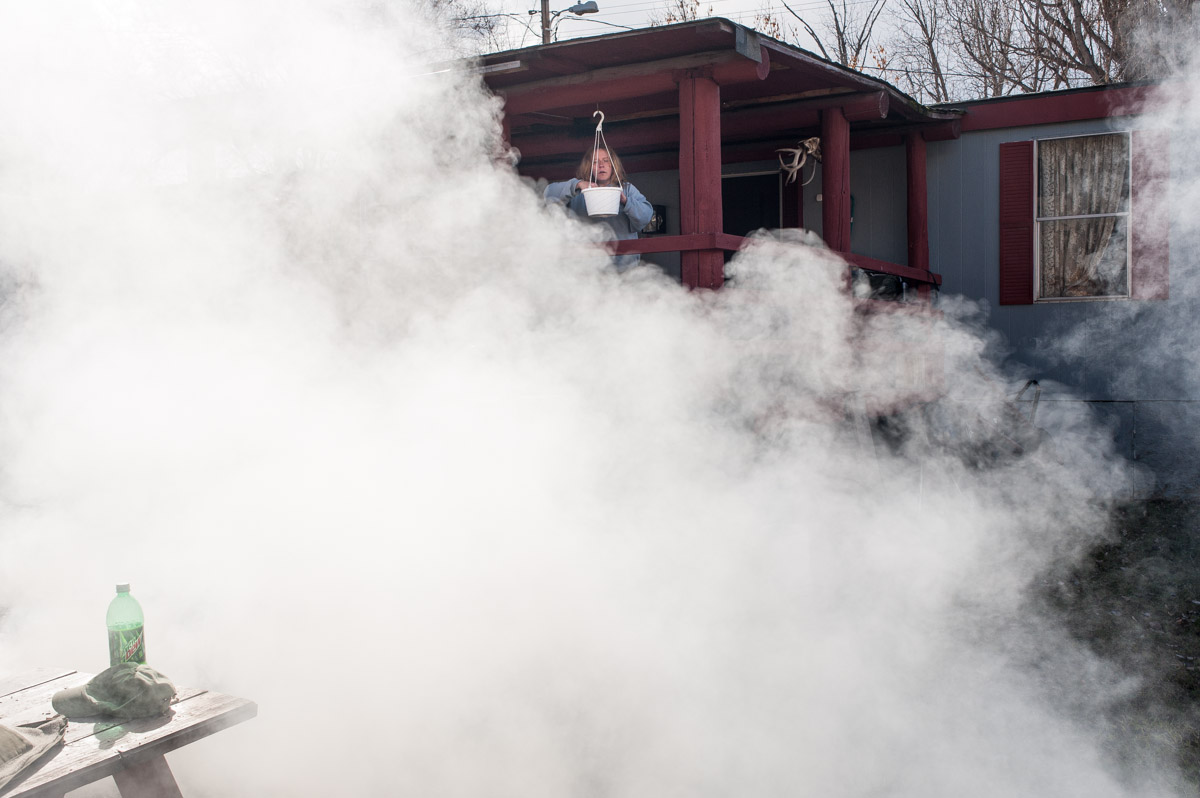
Cheryl Titus says she and her husband, Al, say they received a lot of community support during Cheryl’s recent battle with cancer. “People are very caring,” Al says, while the couple burns leaves and cleans up a little at the first signs of spring. “[People] came out of the woodwork to help.”
River Camping
 My grandfather loved to canoe. And his favorite river was the Current River in the Missouri Ozarks.
He introduced my family and I to canoeing and to the Current on our frequent trips to his home near St. Louis from our home near Chicago. And he shared his passion with our good family friends as well. We still talk about those trips, and others we made over the years. Often, even though I’m in the stories, I don’t remember the events, but I do remember the feeling of being near a river, of being really away from the stresses and tensions of our lives back home, of sharing a bond with those I was with that exists to this day.
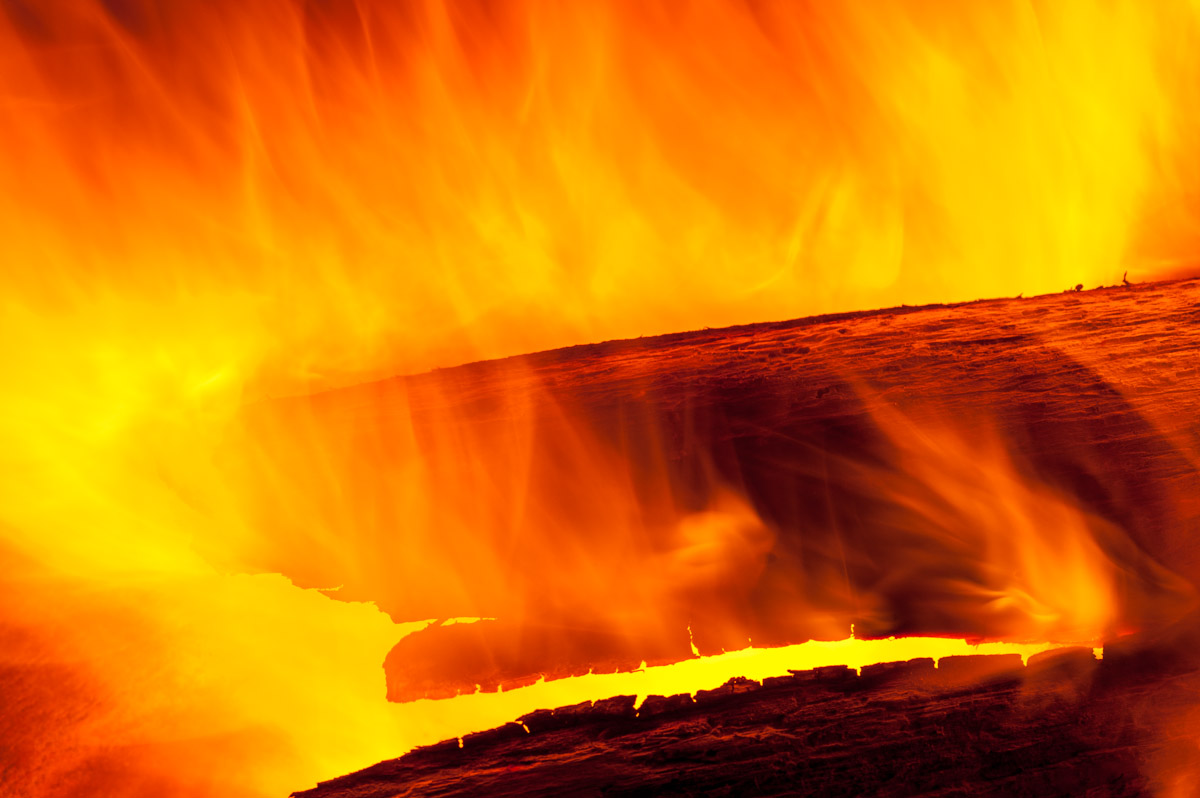
So I am thrilled to have been able to take my daughter on an overnight paddle down the nearby Gallatin River last week. No TV, no Internet, no telephone (well, we turned it off at least), and we had the luxury of time. Time to watch the sun’s reflection fade and disappear on the river that always moves past, time to watch the fire slowly and surely consume a log, time to talk, and time to be silent. It was wonderful.
Politics
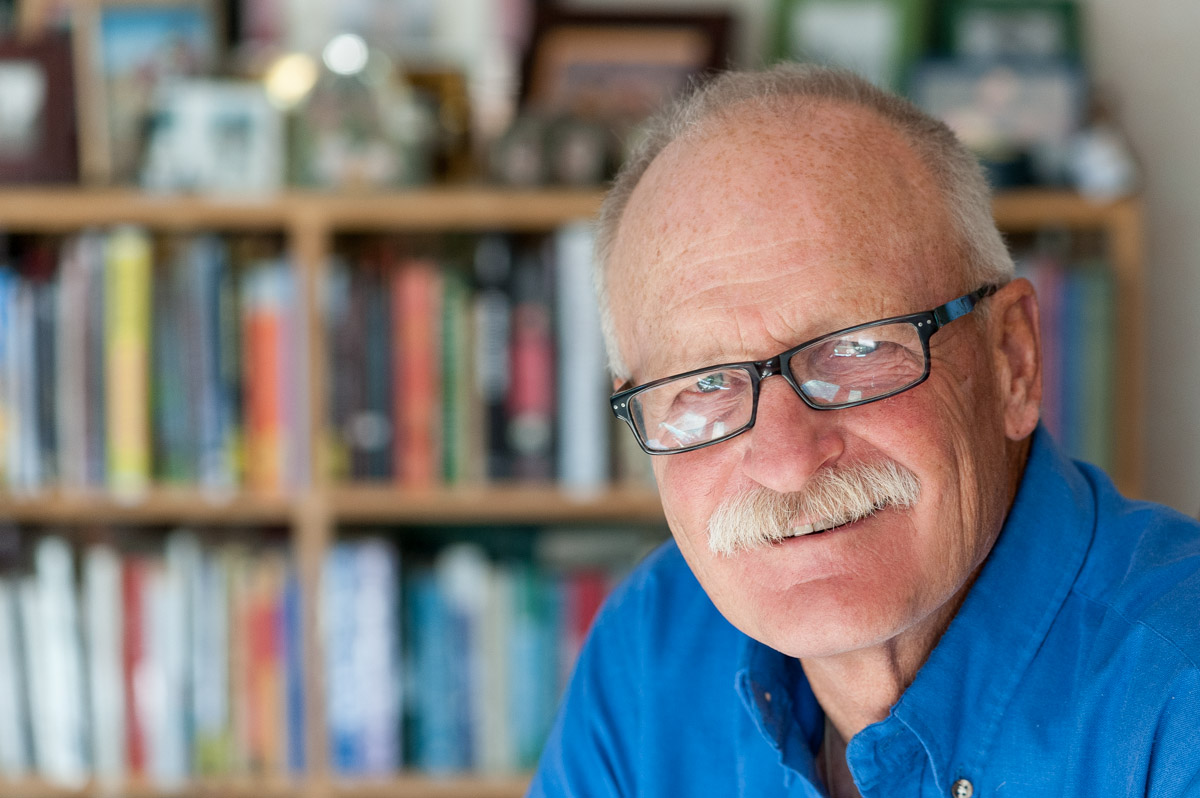
I’ve written before about the freedom of opinion that resulted from leaving my full-time job at a newspaper a couple of years ago. About how I was then able to volunteer for a political campaign that I believed in during the 2012 elections, and about how I like and admire people whose politics don’t necessary agree with mine. And I’ve also mentioned my good friend Al Kesselheim, pictured above, a writer that I’ve worked with for nearly a decade and partnered with to put out Montana: Real Place, Real People.
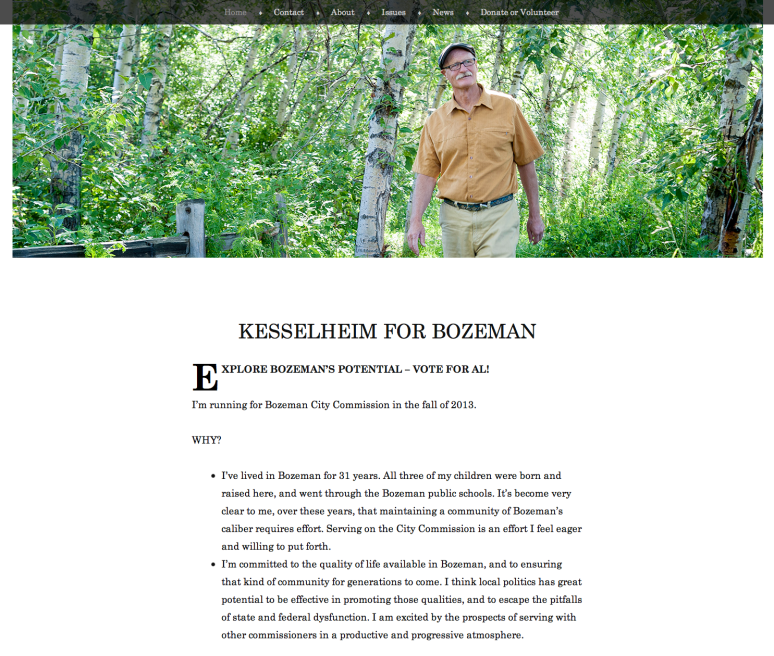
I’m proud to say that Al is running for City Commissioner here where we both live in Bozeman, Montana, and I’ve helped him put together a website. Al and I have driven thousands — maybe tens of thousands — of miles together, covering stories over the past nine years or so, so I’ve gotten to know him well. He’s a great guy with a healthy and rational outlook on the way things are and the way they should be. And I believe he’ll make a great city commissioner.
 Thomas Lee True West