
Refreshed
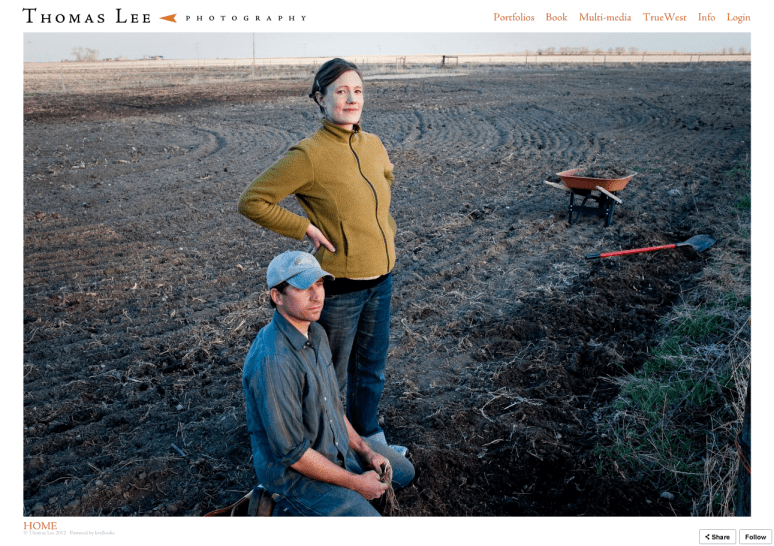
I’m proud to say that I’ve got a brand-new, super-duper version of my website up and running as of today. It’s supposed to scale the pictures so that they fill your screen, no matter what size your screen is. I hope you like it.
Wing detail
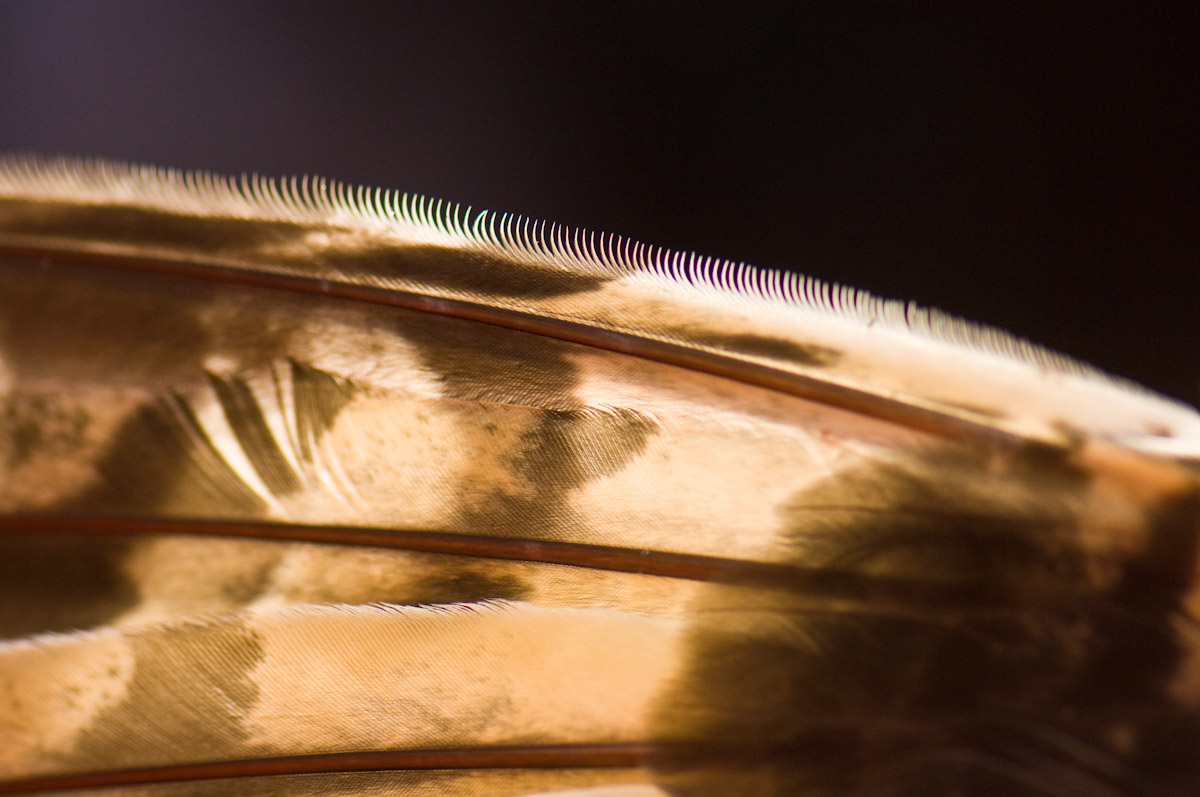
This is the wing of a long-eared owl Denver Holt and the Owl Research Institute caught and released near Missoula a few years back.
The tiny feathers along the edge of the wing are called leading edge fringe. They form a soft, velour-like surface texture and combine with trailing edge fringe to reduce aerodynamic flight noise to ultrasonic levels. So the owls can fly silently and catch their lunch unawares.
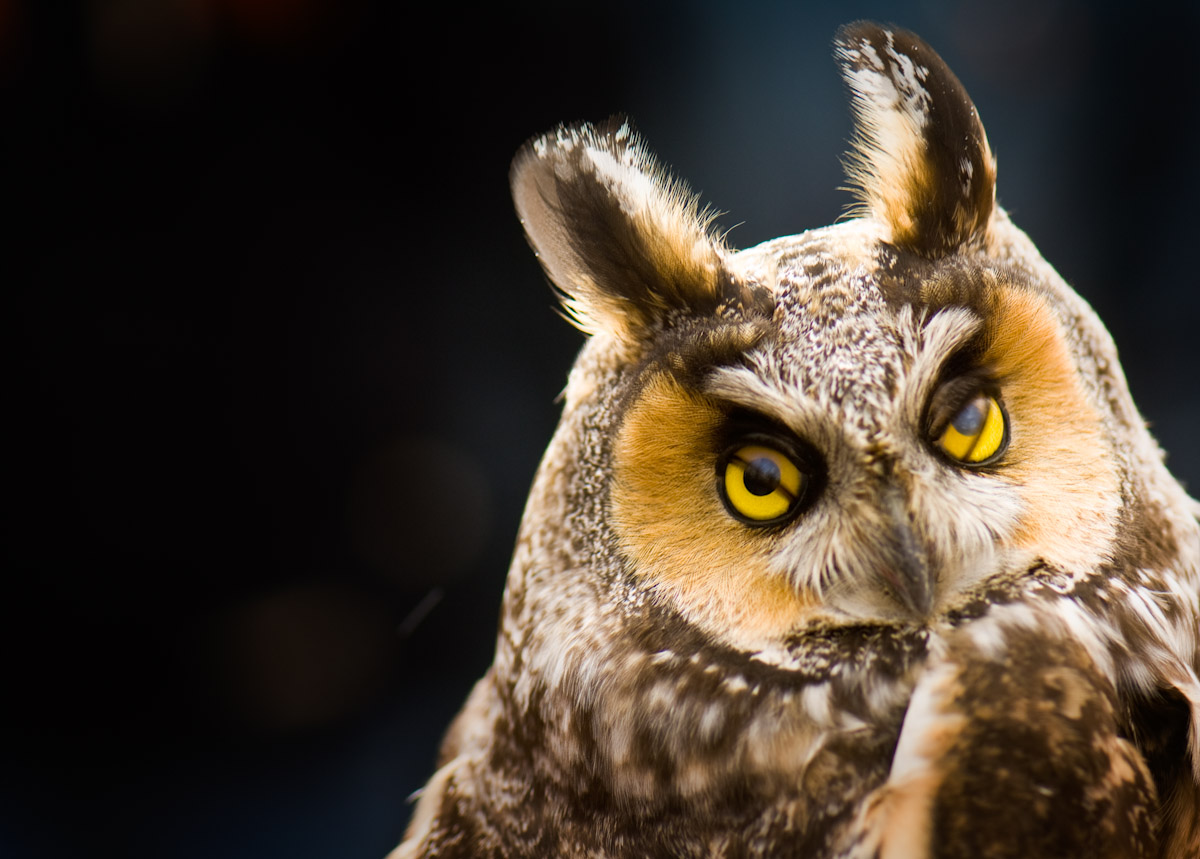
And the owls have two sets of eyelids they can blink independently. Cool, huh?
Represented
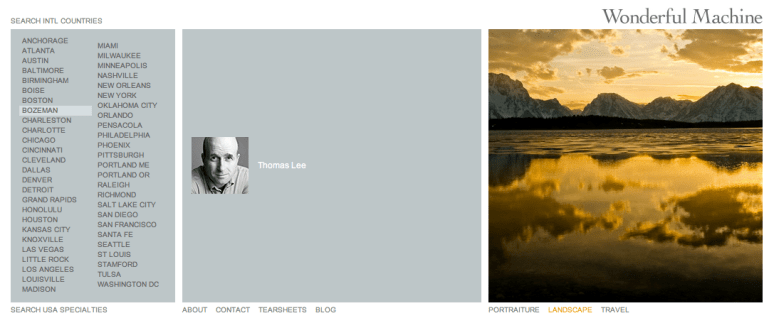
I’m very pleased to now be represented by Wonderful Machine, as of yesterday.
“Wonderful Machine provides art buyers with the most comprehensive source of high quality photographers doing all kinds of work, all over the world. We’re selective about the photographers we show, we list them only in locations where they actually live, and only in specialties in which they are highly proficient,” their website states.
Here’s to a long and happy relationship.
Reach Benefit
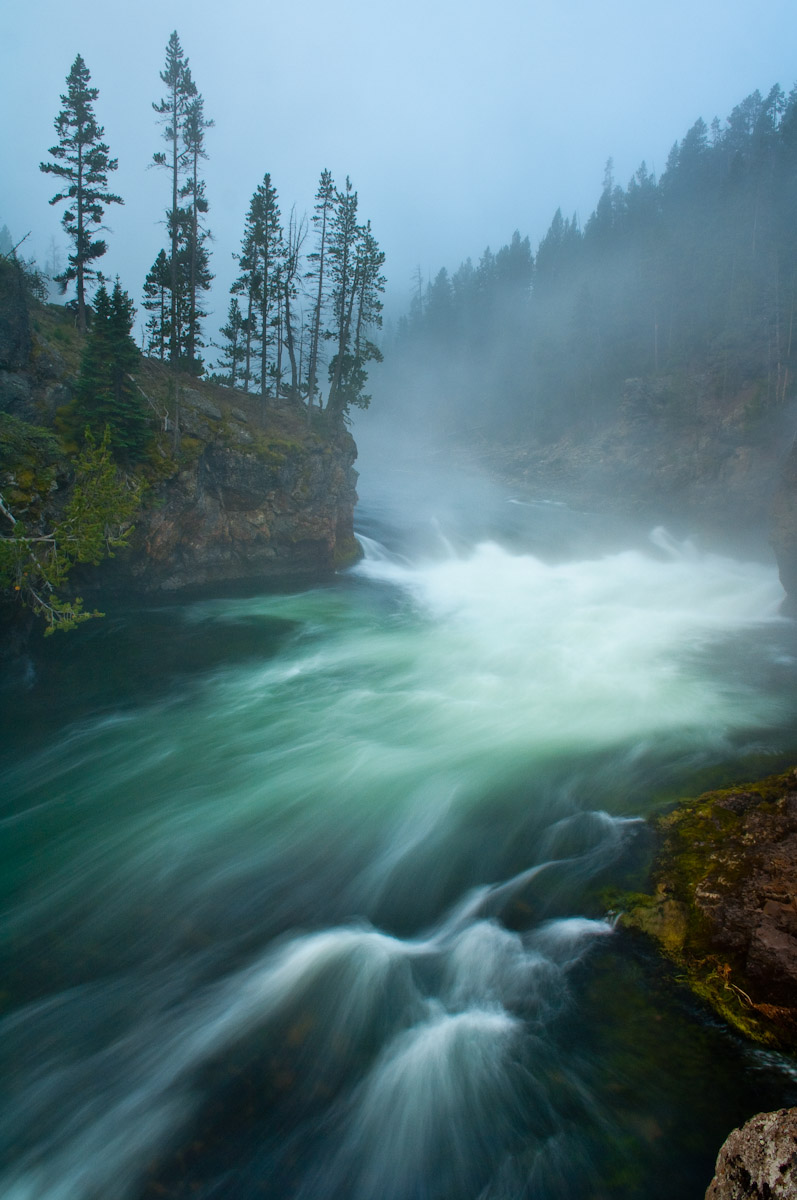
Rena and I were pleased to participate in the Reach Have A Heart Art Auction on Saturday night here in Bozeman. We donated this picture of the Yellowstone River plummeting toward Upper Falls and the Grand Canyon of the Yellowstone. The picture was one of many works auctioned off during the evening to raise money for Reach, which serves people in the Gallatin Valley who have developmental disabilities and traumatic brain injuries. They provide vocational training and residential community support for these remarkable people.
I don’t know how much was raised during the event, but it looked to be successful and sure was a great time. Special thanks to Dee Metrick of Reach, who put the whole thing together.
Coyotes
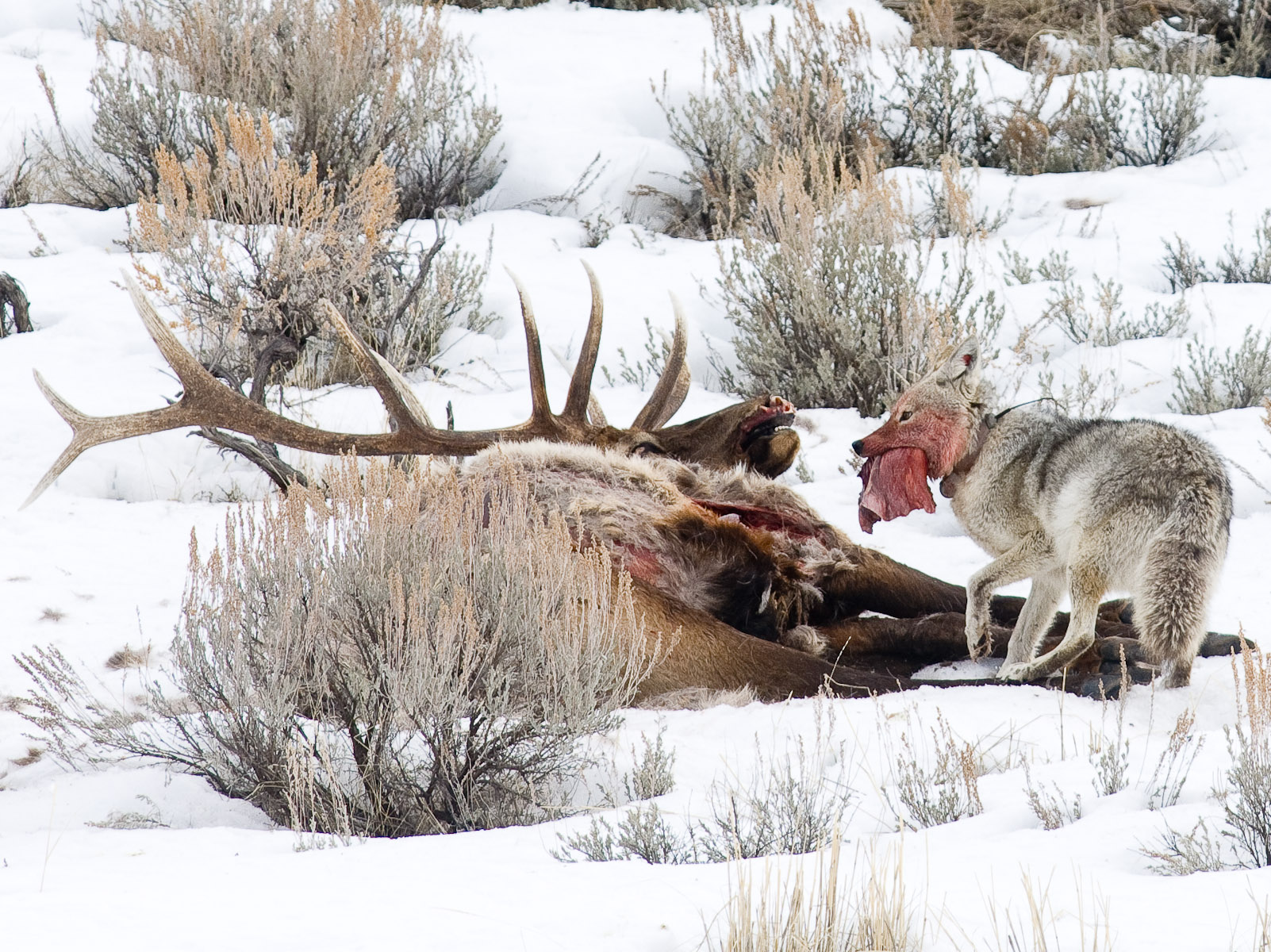
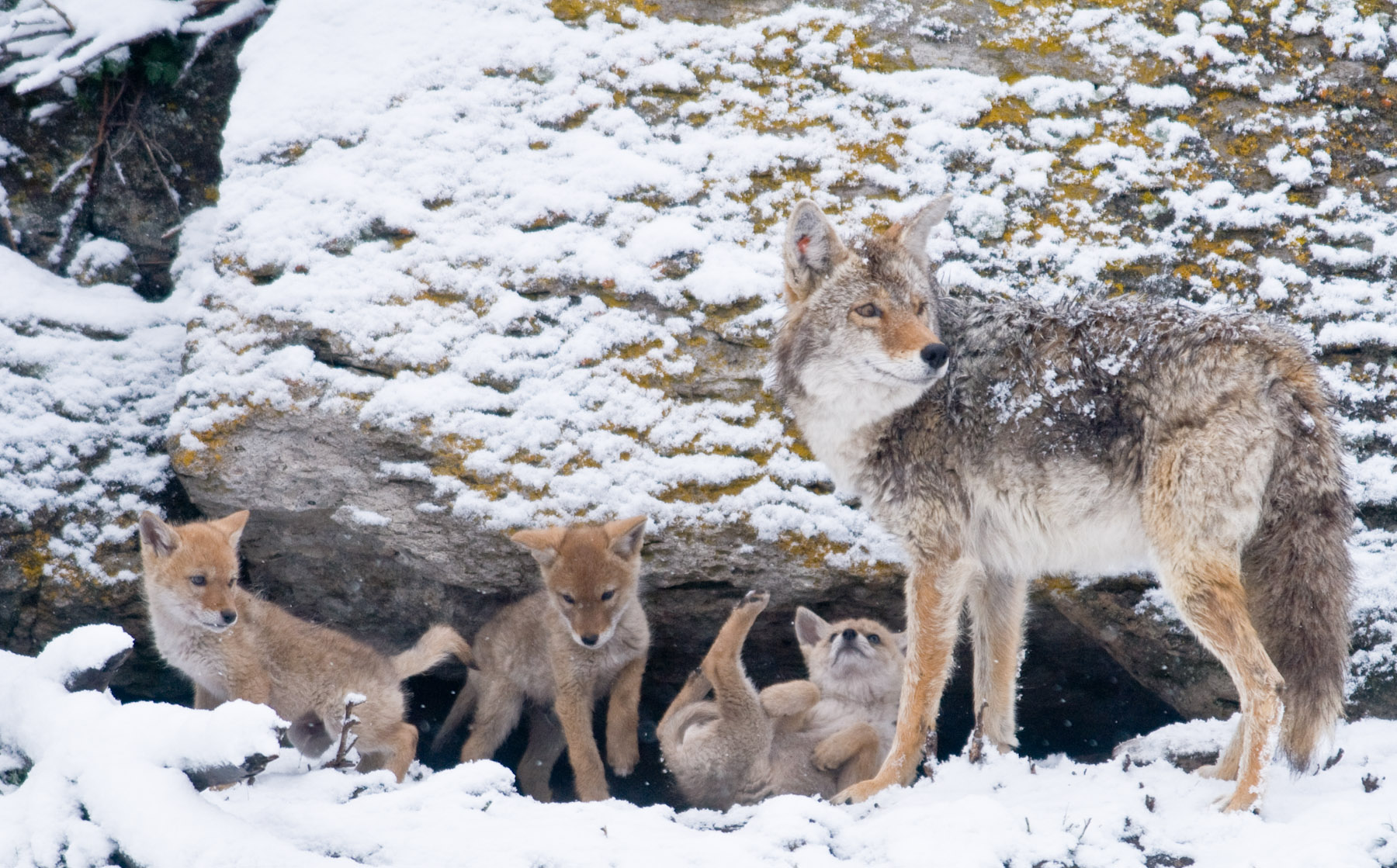
Coyotes and ravens were my favorite animals when I was making regular visits to Yellowstone. They were survivors.
People who know far more than I told me that when wolves were reintroduced to the park, coyotes discovered that they were less afraid of people than the wolves. So whenever some wolf would harass a coyote, the coyote would head for the road.
I love that. Not only because it shows smarts and adaptability, but also because it meant I got way better pictures of coyotes than wolves. I saw the realities of their lives, both brutal and tender.
Montana Torah
Montana and the Rocky Mountain West are a pretty homogenous region. Most of us are Anglos and those that profess a religion usually are talking about some form of Christianity. So when a new wrinkle is added to our cultural fabric, it can be a very dramatic event.
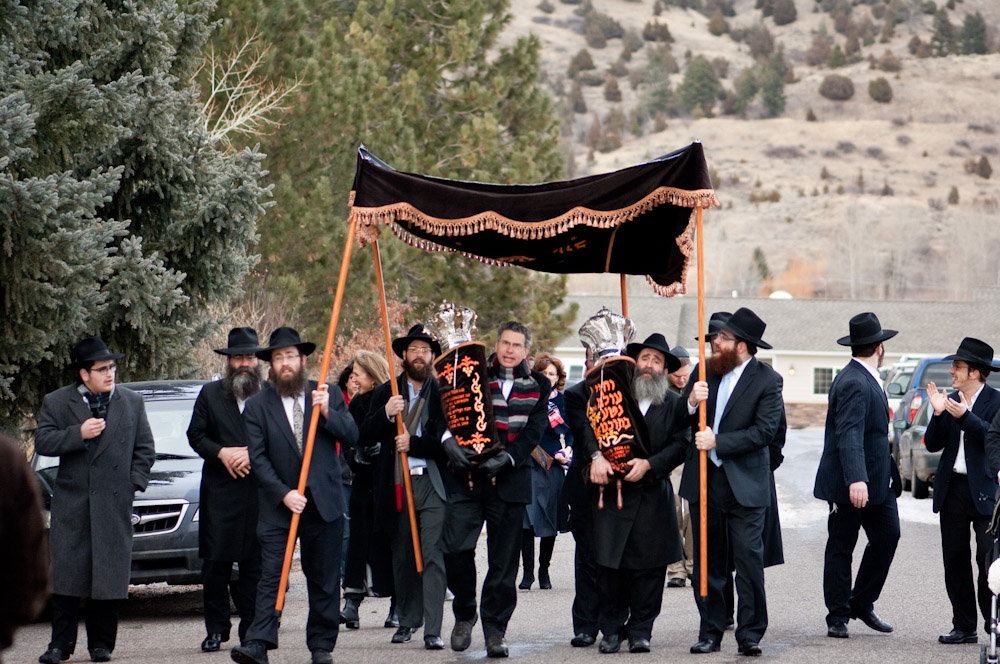
So it was on Sunday when a Bozeman synagogue dedicated two Torahs. People came from all over, including Brooklyn, N.Y., and Chicago, to attend and it was a visual feast of new sights here in cowboy country. I was there assisting my good friend Doug Loneman.
The synagogue is The Shul, and it was started recently by Rabbi Chaim Bruk who moved to Bozeman from Brooklyn. Bruk and his congregation practice a form of Judaism called Chabad-Lubavitch. They accept people of all levels of orthodoxy, according to one member I talked to. So some wear beards and black while others dress more mainstream.
There were two Torahs, both written entirely by hand. They were signed by a scribe, there was a brief ceremony, a parade, singing, dancing, then a party. And there were a ton of people, all of them happy. It was a wonderful event. I’m glad to have been there to see it.
We’re All From Somewhere Else
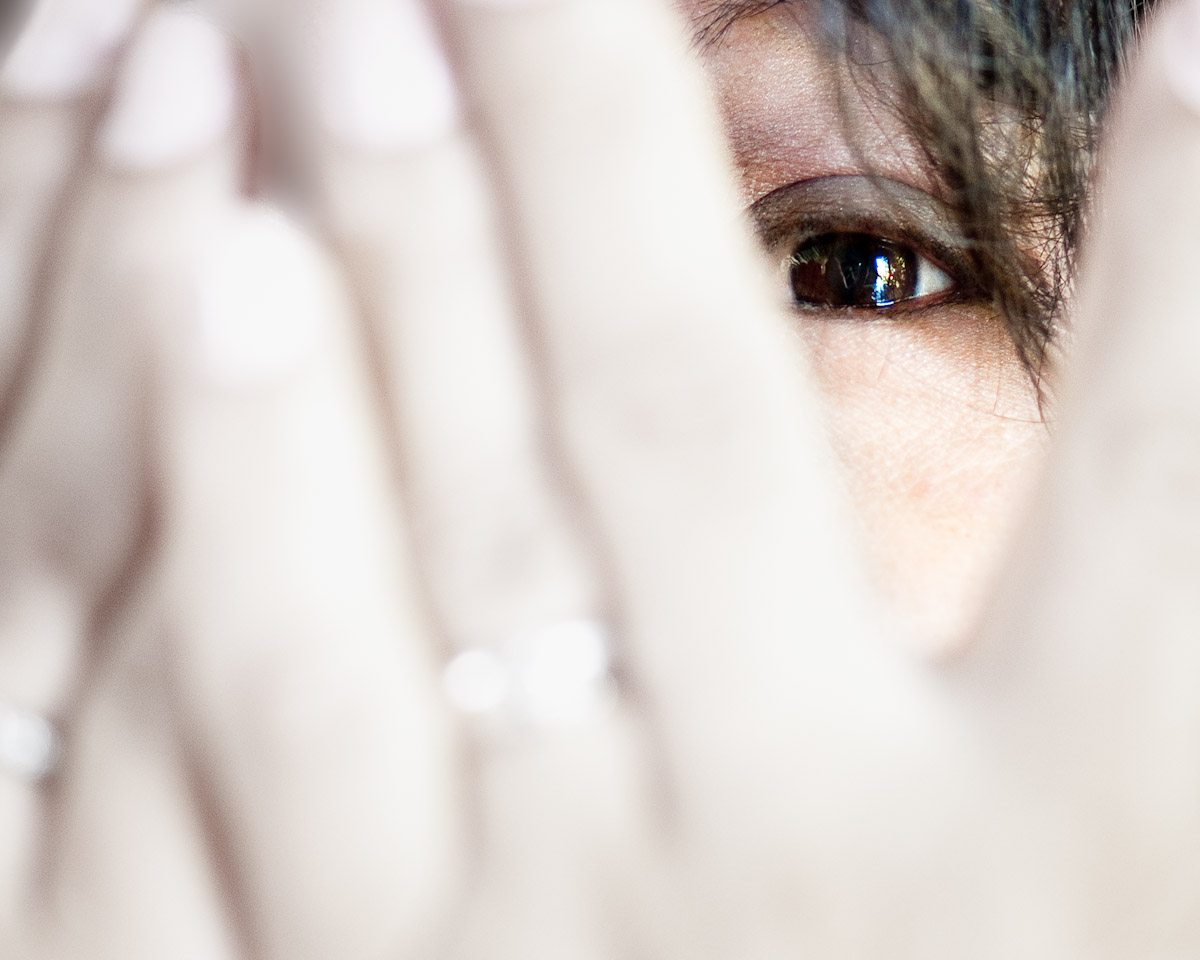
I have a colleague who once told someone, “Unless you’re and Indian or a gopher, your family hasn’t lived in Montana longer than mine.” As you can imagine, how long a person has lived in this beautiful but harsh country is a source of great pride for some.
Montana has a long history of new arrivals and an equally long history of those who are already here wanting to shut the door on everybody else. Crowds are an anathema and good paying jobs are scarce.
These days a lot of the new arrivals are coming from other countries and most of them are at least related to someone who is undocumented. Often one parent and some of the kids are legal while the rest of the family is not. They could be one speeding ticket away from being split up, some being sent to a place they have no memory of, no means of support, no familiarity. My friend Al Kesselheim and I found some of the real people living these stories. Some of the names have been changed.
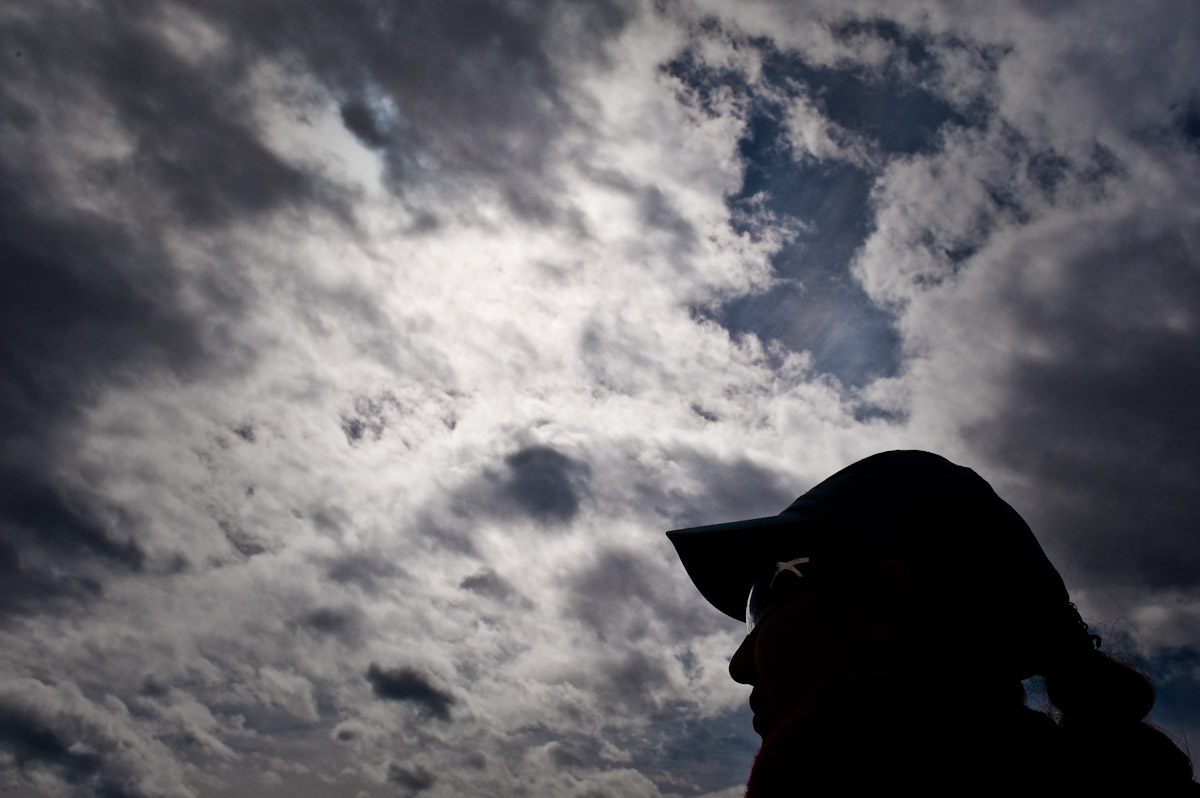
Victoria had a rough childhood in Mexico and took a chance when relatives visiting from Texas offered to take her to America. She got married in 2003. Her husband had successfully applied for citizenship before 9/11, but Victoria was told she would have to return to Mexico for at least 10 years to start the process of citizenship. She lives illegally in Bozeman, cleaning houses.
“Sometimes I am very afraid,” she says. “My girls ask me what we would do if I had to go back. I have spent many lonely nights thinking about my future, missing my home and friends. But I believe something will change. It has to. Everyone has the right to look for a better life, don’t they?”
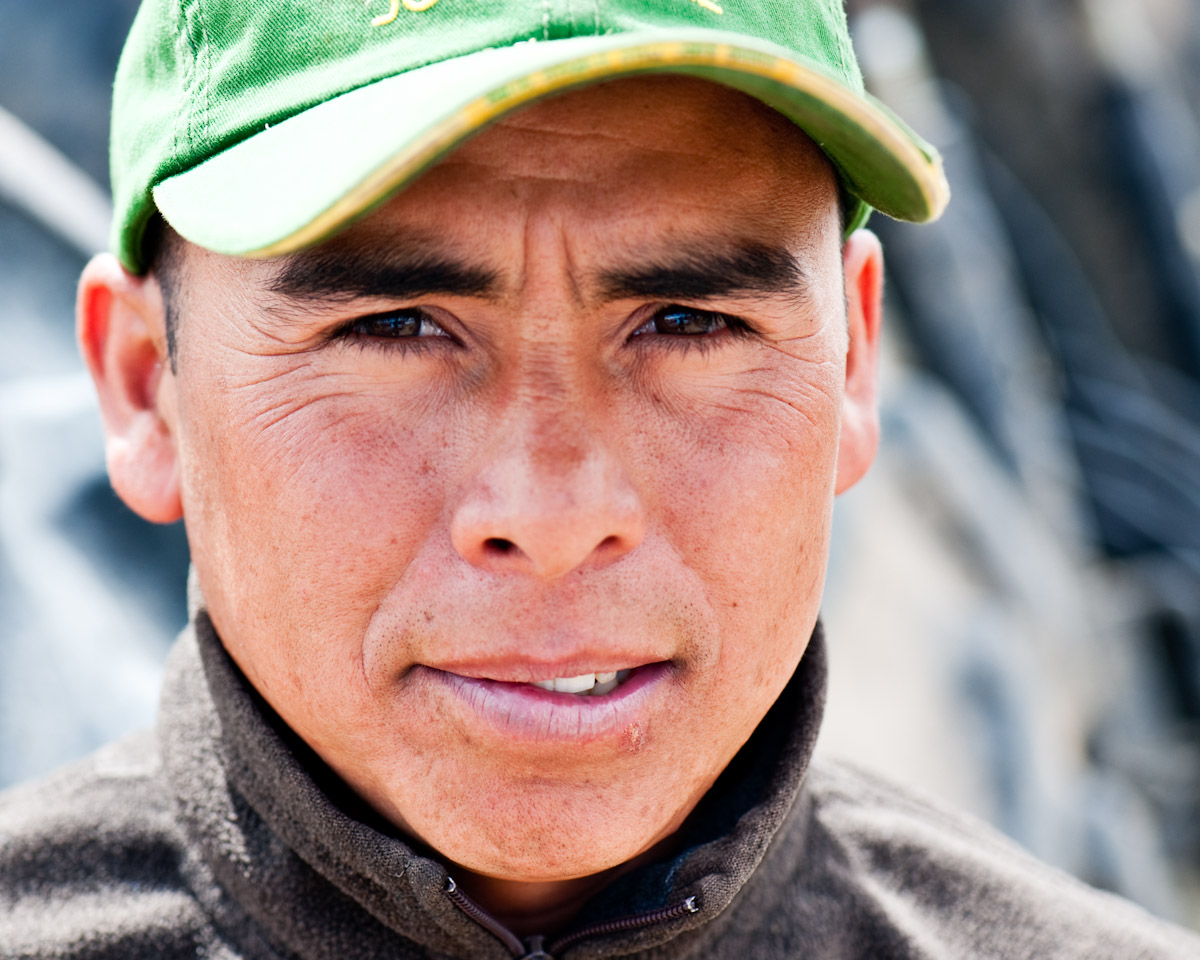
Hector, 34, lives legally in western Montana where he works as a ranch laborer on a visa that requires him to spend a couple of months each year back in Mexico. He smuggled his wife and young son north soon after he got his visa about 15 years ago. His wife and oldest son remain undocumented, but the two children born since the move are both legal citizens. His wife is afraid to go out, but the kids go to local schools and are involved in the community.
“We’re planting now,” Hector says. “We go two to three months without a day off. I don’t see the kids for days at a time becasue I leave before they get up and get home after they’re in bed. I do work, like irrigating, that other people don’t want to do. My boss puts notices up at the local Job Service for workers, but nobody shows up.”

Carmela is 19, a candidate for prom queen. She was born a U.S. citizen in California but spent much of her childhood in Mexico. Her parents moved to Montana illegally when Carmela was in the eighth grade. She didn’t speak English. A few years later, she gets As and Bs in school, volunteers on an aquatic water study, is a member of the International Club, holds down a part time job, will soon graduate high school, wants to go to college… and has survived thyroid cancer.
“People don’t understand how hard it is to leave a country and come to a new place,” she says. “They don’t know about struggling to learn a new language, going to school, finding a job, and always worrying about that knock on the door.
“People ask why we came. We came to get better jobs, to get an education, to find better opportunities.”

Justice Pedro Hernandez is a Vietnam veteran and has been a justic court judge in Billings for nearly 40 years.
“My grandparents were revolutionaries,” he says. “They fought with Pancho Villa and Zapata in Mexico. They came to Del Rio, Texas, to escape tyranny and oppression. In 1948 my father came north to Hardin, Montana, to work for a Japanese farmer. We all moved up for good in ’49.
“We never knew fear. We didn’t have any legal issues to overcome. We were part of the community. I was a star football player. We didn’t have to worry about deportation or any of that.
“This idea of illegal aliens. I think our representatives have forgotten where they came from. They have forgotten the Constitution. If we oppress people, it will come back to haunt us. Oppression is what brought people to America, what brought my parents and grandparents to America.
“Our duty is to put these stereotypes and assumptions aside.”
Ekalaka — Warts and All
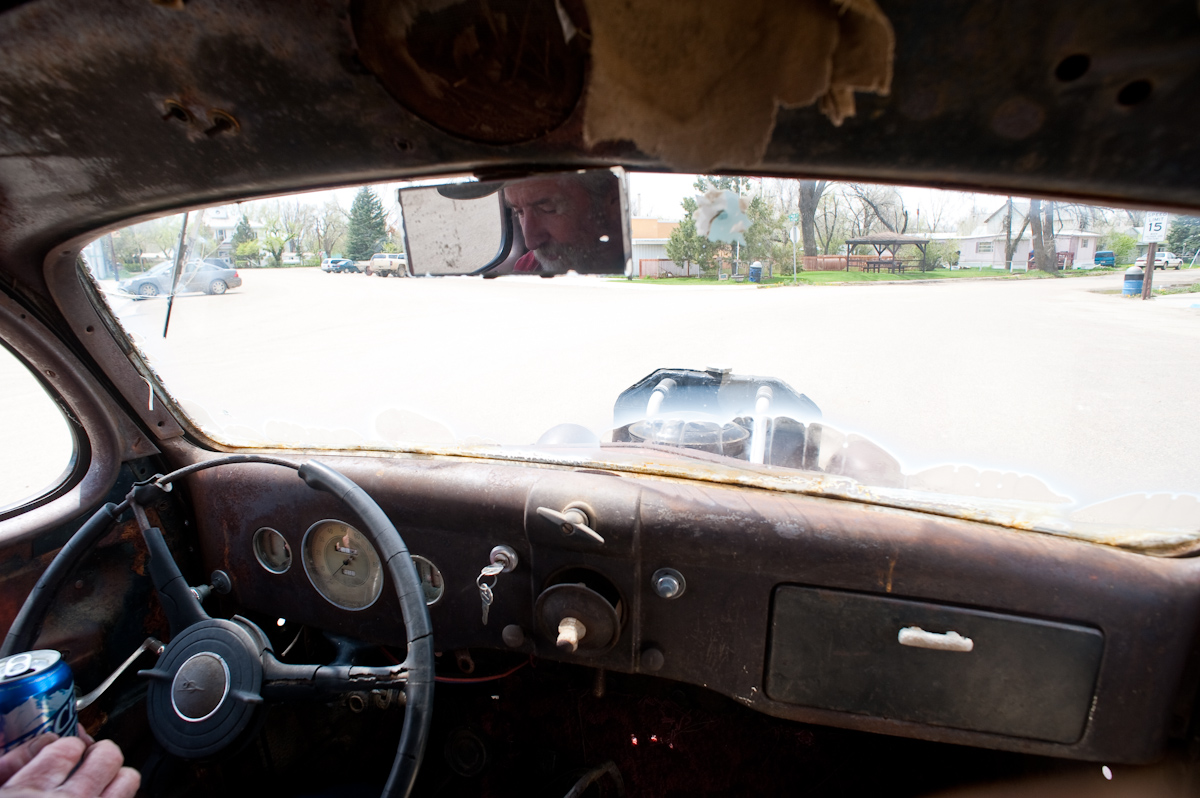
Being a journalist occasionally means walking a fine ethical line between documenting what is really going on without affecting it and being a responsible person. I was presented with just such a quandary last May when I shot this story on the town of Ekalaka in southeast Montana. The car in the above picture wouldn’t start, so I was spared this dilemma, though it came again later. And then I did something I hope my daughter never does and that’s ride in a vehicle being driven by someone who is drinking. I thought you should know.
“Did you set your clock back 40 years?” was the question I was asked by the owner of this antique car. And things did seem to be about 40 years behind — in ways good and not so good. Until very recently, drinking a beer while driving a vehicle was not illegal in Montana. And not too long ago, people all over the state were really this friendly, this welcoming. I thought Ekalaka a very true, authentic and unpretentious place. It was unashamed of being small and quaint, yet humble as well, acknowledging some of the faults outsiders might find. The people there seemed to like their town just as it was, warts and all.
Wisdom in a Nutshell
I’ve compiled the very best of Faces of Wisdom into a three-minute version. I hope it concisely and succinctly gives four different points of view on what is important in life. I would love to hear some additional thoughts from anyone who cares to share their views on this subject.
Fighting An Invasive Species
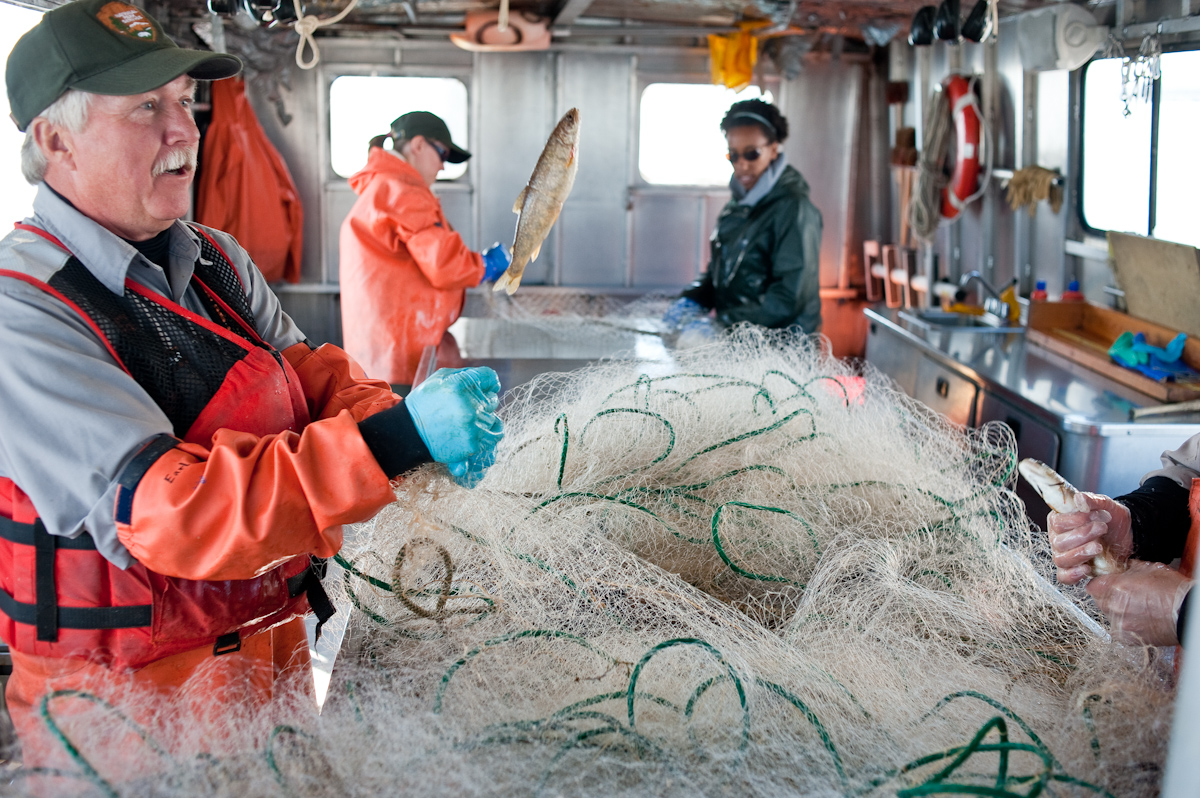
Last summer, writer Carly Flandro and I spent an amazing day on Yellowstone Lake inside Yellowstone National Park. We were documenting efforts by the National Park Service to eliminate lake trout from the Yellowstone ecosystem. The lake trout, likely introduced by a “bucket biologist” in the 1980s, are non-native to Yellowstone and have been decimating populations of the native Yelllowstone cutthroat trout. So the NPS is employing its own boats as well as those of several commercial fishing outfits to catch as many of the lake trout as they can, hoping their efforts will allow the cutthroats to recover.
 Thomas Lee True West